Last updated November 20, 2026
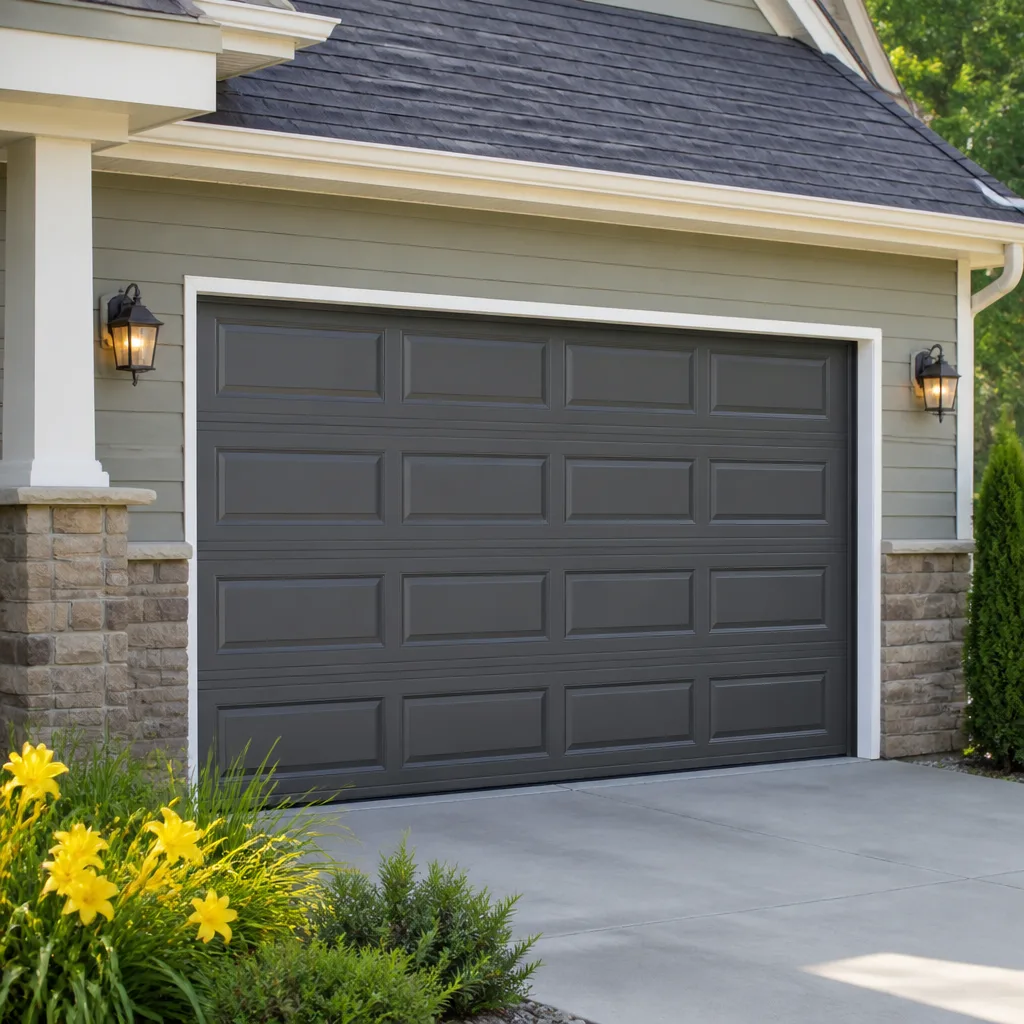 Raised-panel steel
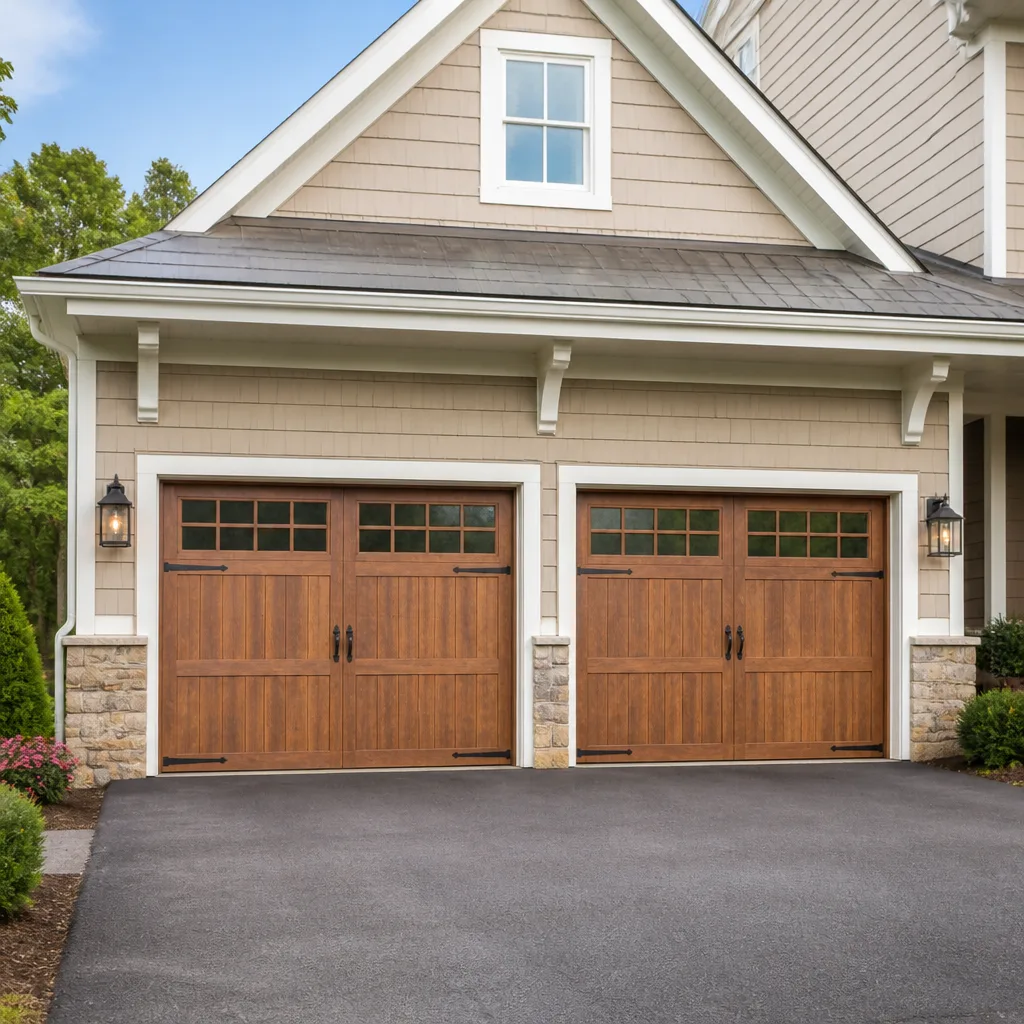 Carriage house
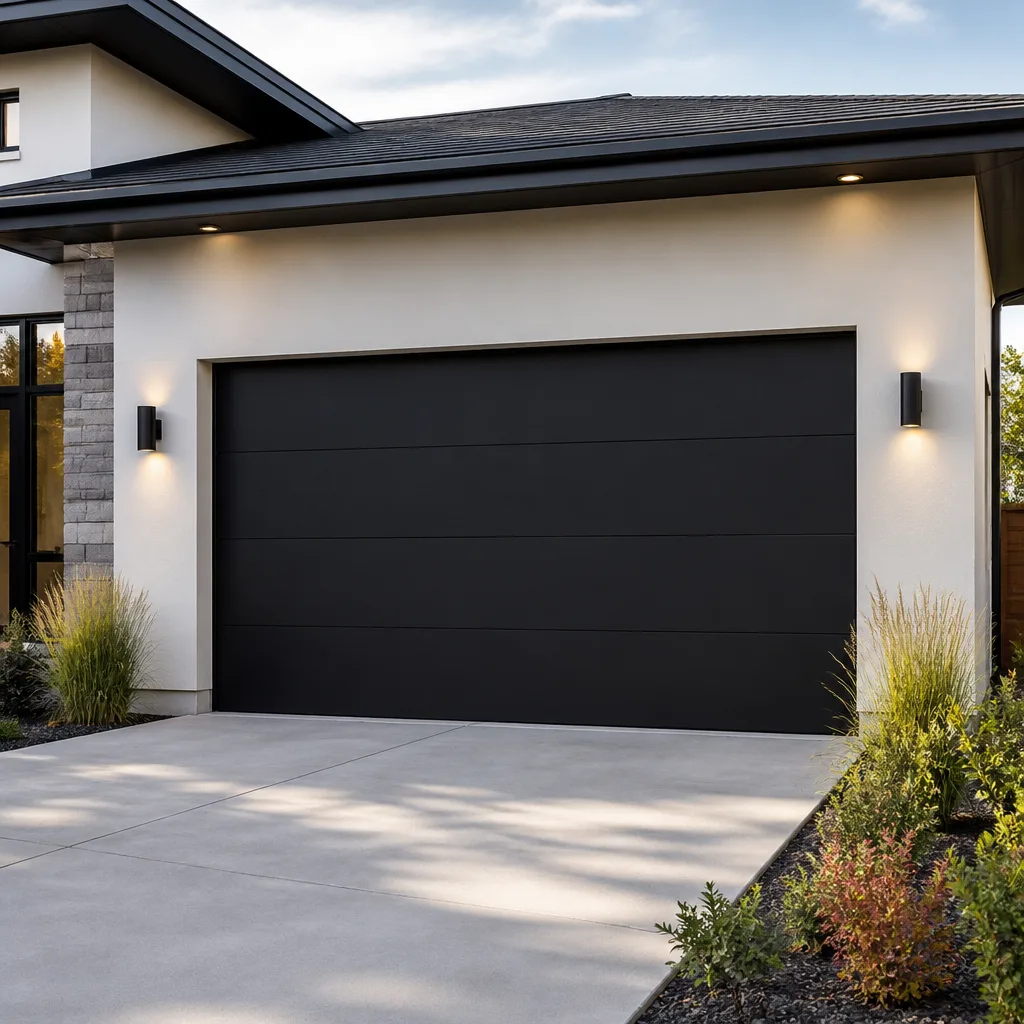 Modern flush
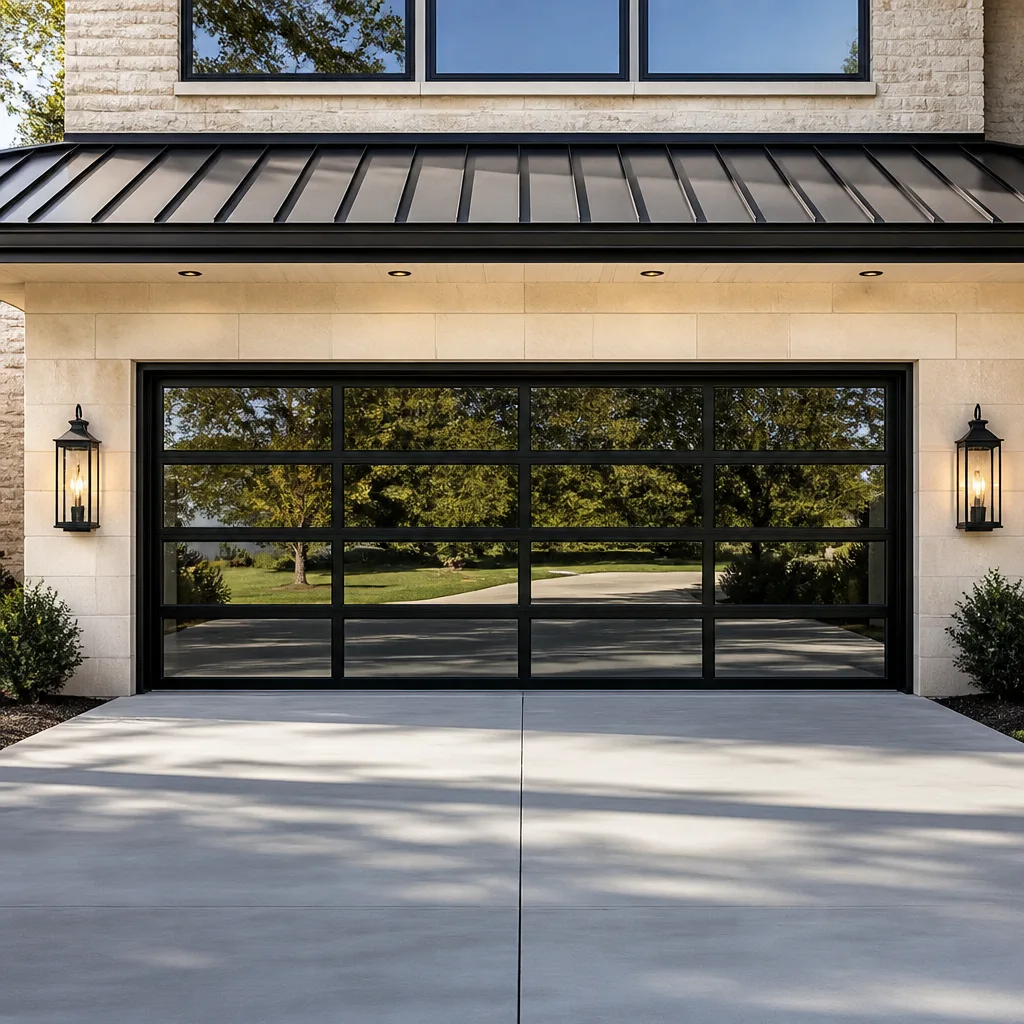 Full-view glass
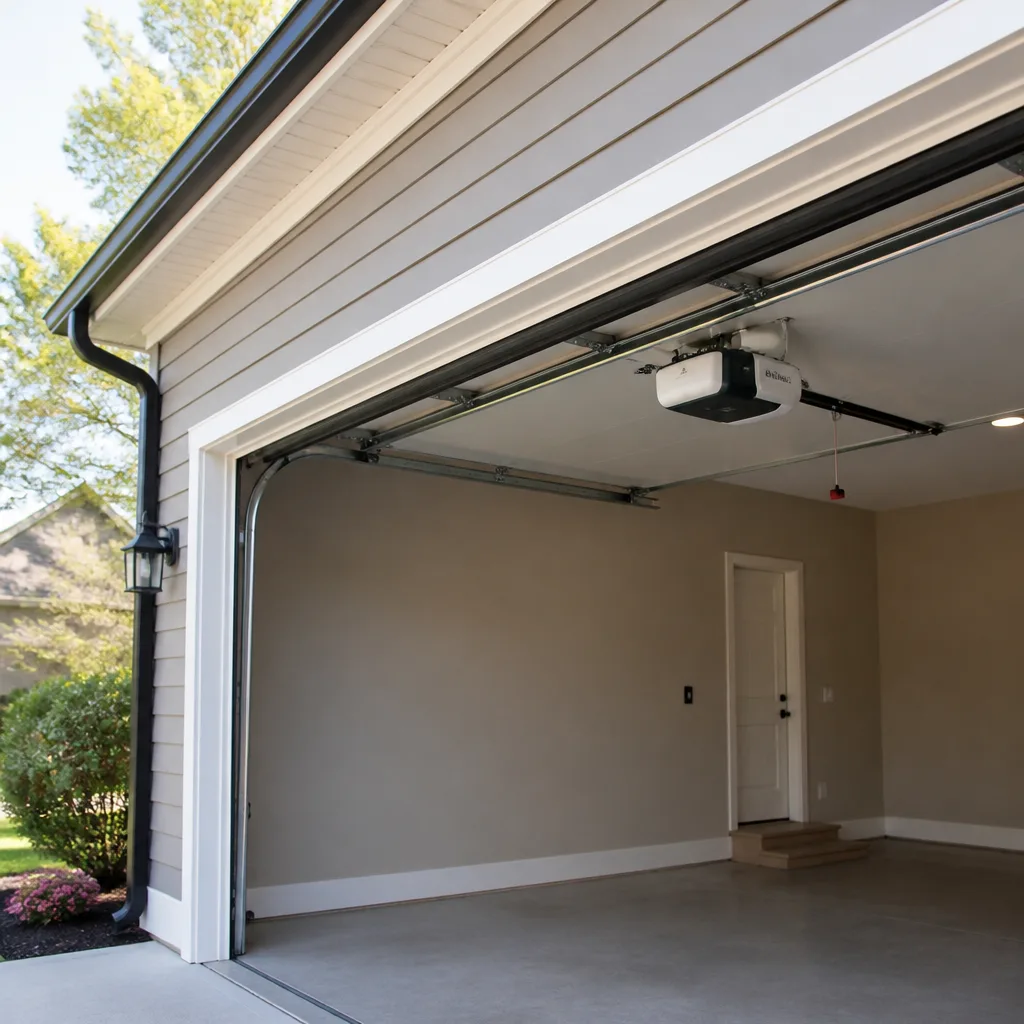 LiftMaster openers
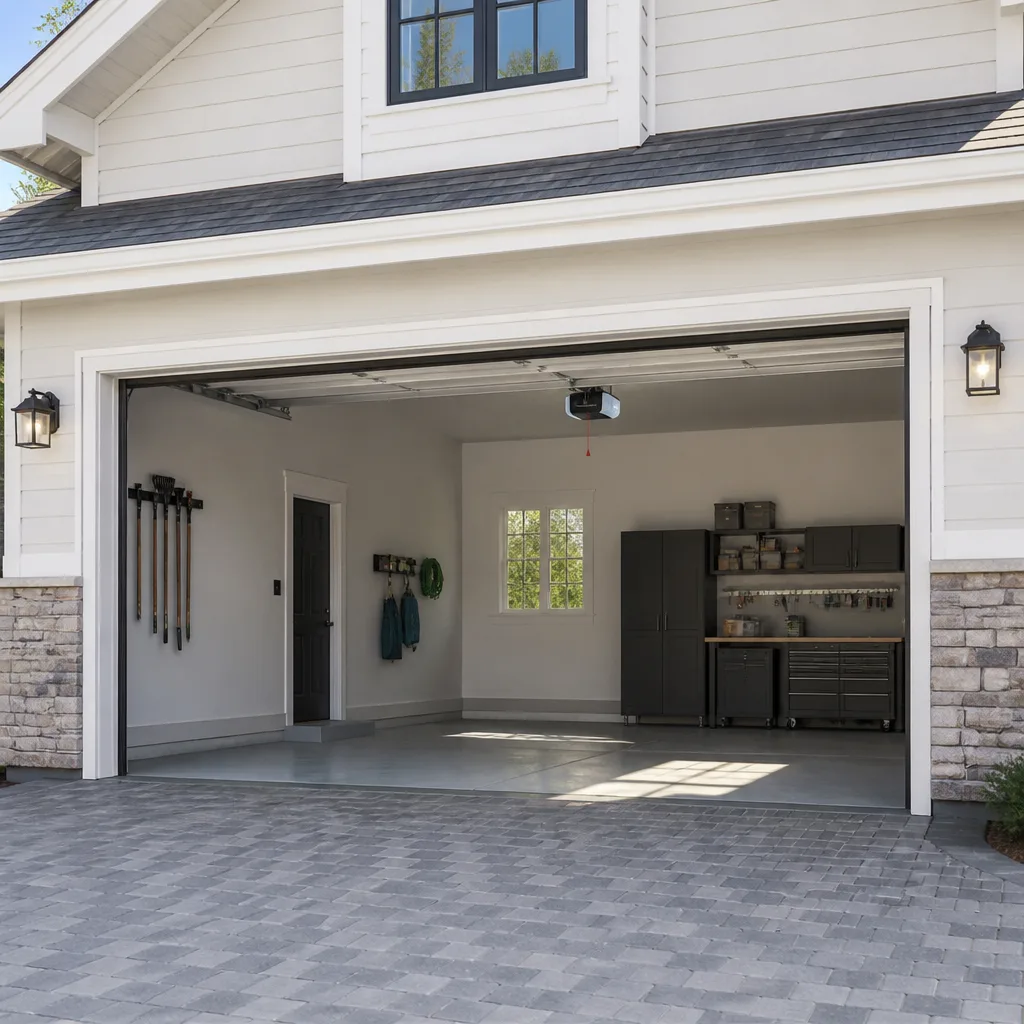 Chamberlain openers
Full 25-point door and opener safety check with every visit - springs, cables, rollers, tracks, and your LiftMaster or Chamberlain opener included
You get a price before we start. It does not change when the pro arrives.
Get your free estimateGarage Door Repair Troubleshooting in Stamford: Common Problems and How to Fix Them
Here’s the thing about garage doors: the symptoms lie. A door that reverses before it touches the ground and a door that won’t budge at all feel like completely different problems, yet both can trace back to a single misaligned safety sensor. Homeowners in Stamford spend money replacing openers when the real culprit is a snapped spring, and they blame the springs when a worn roller is grinding on the track. This guide is built to break that cycle. We’re going to map the six most common garage door failure patterns to their actual causes, show you which fixes are safe to handle yourself, and explain which ones require a trained technician before someone gets hurt. By the end, you’ll know exactly what’s broken, roughly what it costs, and what to tell us when you call.
Quick Answer
Most garage door problems in Stamford trace to one of six components: safety sensors, torsion springs, cables, rollers and tracks, the opener itself, or the bottom seal. Sensor misalignment and limit switch adjustment are homeowner-safe fixes. Broken springs and frayed cables are not – those require a trained technician because of the extreme tension stored in the system. Diagnosing the correct pattern before you call saves you the cost of a wrong repair.
Styles & brands we work with
- Raised-panel steel
- Carriage house
- Modern flush
- Full-view glass
- LiftMaster openers
- Chamberlain openers
Table of Contents
- Your Symptom-to-Cause Diagnostic Tree
- Door Reverses Before It Hits the Ground
- Door Won’t Open at All or Opens a Few Inches
- Grinding, Squealing, and Why Stamford’s Weather Makes It Worse
- Opener Runs but the Door Doesn’t Move
- Homeowner-Safe Fixes vs. Technician-Only Jobs
- What to Have Ready Before You Call
- The Misdiagnoses That Cost Stamford Homeowners Money
Your Symptom-to-Cause Diagnostic Tree
Before you touch anything, match your door’s behavior to the pattern below. This is how a technician’s mind works when the phone rings: behavior first, component second, fix third. It’s not about guessing the brand yet – it’s about narrowing the system down before the visit.
- The door reverses before it reaches the floor. Likely cause: safety sensor misalignment, obstruction in the photo-eye path, or a limit switch set too high. Usually a homeowner fix or a quick sensor adjustment.
- The door opens a few inches and stops, or won’t open at all. Likely cause: a snapped torsion spring, a broken extension spring, or a stripped opener gear. This is a technician job almost every time.
- The door grinds, squeals, or shudders through its travel. Likely cause: dry or worn rollers, a bent track, or a loose hinge. Often lubrication or a roller swap.
- The opener hums or clicks but the door doesn’t move. Likely cause: broken spring, disengaged emergency release, stripped drive gear, or a dead capacitor inside the opener.
- The door opens but won’t close, and the opener light flashes. Likely cause: sensor blockage or misalignment. The flashing light is the opener telling you the safety circuit is broken.
- The door sags at one corner, binds at the bottom, or lets in daylight under the bottom seal. Likely cause: a frayed cable, a worn bottom seal, or a hinge pulled loose from the door panel.
Run through that list once with the door in front of you and you’ll usually land within one or two components. From there, the sections below go deeper into each pattern, what it costs, and what you can safely do yourself. If you’d rather skip the diagnosis entirely and get a trained eye on it, our team handles garage door repair across Stamford and can usually be on site the same day for a diagnostic.
Door Reverses Before It Hits the Ground
A door that reverses before it reaches the floor has almost certainly lost its safety sensor signal. The two photo-eye sensors near the bottom of the track on each side shoot an invisible beam across the opening. If the beam is broken or the sensors are out of alignment, the door’s logic board reads “obstruction” and lifts the door back up. That’s a feature, not a failure – the door is protecting whatever it thinks is in the way.
Most of the time the cause is one of these:
- Misalignment. A bump, a broom handle, or a shift in the track knocks one sensor slightly out of aim. The LED lights on both sensors are steady when aligned and blinking when not.
- Dirt or cobwebs. Stamford’s humid summers and pollen season cloud the sensor lens. A soft cloth on both lenses clears this in seconds.
- Sun glare. Late afternoon light through an open garage door can blind a sensor. This is more common on west-facing garages.
- Loose wiring at the sensor bracket. The low-voltage wire feeding the sensor loosens over time, especially at the terminal screws.
- Damaged sensor. If one sensor’s LED is dark no matter what you do, it needs replacement.
Sensor alignment is the single safest homeowner fix on the entire garage door system. No stored energy, no tension, no injury risk. If re-aiming both sensors so their LEDs go steady doesn’t solve it, the problem has moved up the chain – usually to the opener’s travel limits, which we cover below. On LiftMaster and Chamberlain openers, myQ diagnostics in the app will often tell you directly which sensor is failing.
Door Won’t Open at All or Opens a Few Inches
If your garage door opens a few inches and stops, or won’t lift at all while the opener runs, stop and call a technician before touching it again. This is the classic signature of a broken torsion spring or a snapped extension spring. The spring is what counterbalances the door’s weight – when it fails, you’re asking the opener to lift a door that suddenly weighs far more than it’s rated for, and it will burn out within a few cycles if you keep trying.
A broken torsion spring usually announces itself with a sharp bang that echoes through the house. If you’ve heard that sound and the door won’t lift, the diagnosis is essentially confirmed. A snapped extension spring is quieter but equally disabling. Either way, the door becomes a dead weight on the opener and a strain on the tracks.
Here’s the part most homeowners underestimate: a torsion spring holds enormous stored tension even when the door is fully down. It’s the highest-risk component in a residential garage door system, and it’s why spring work is a dedicated trade skill. Reach for the winding bars yourself and the spring can release that stored energy into your hand or arm without warning. This is the one area where we consistently advise against any DIY attempt.
On a double-door home in Stamford, spring replacement is often done as a matched pair – if one spring has failed, the second is usually close behind on the same duty cycle. We quote per spring, and a pair costs about twice a single spring. If you’ve got the bang-and-no-lift symptom, our garage door spring repair team can confirm both springs, get the right wire gauge and length, and have you opening again the same day in most cases.
Grinding, Squealing, and Why Stamford’s Weather Makes It Worse
Grinding, squealing, and shuddering during travel are almost always a roller, track, or cable problem – and Stamford’s climate accelerates all three. Connecticut’s humid summers and hard freeze-thaw cycles in winter are the specific conditions that punish a garage door’s moving parts. Here’s how.
What the weather actually does
- Humidity rusts cables. The steel cables that lift the door are lubricated from the factory, but summer humidity slowly strips that, and rusted cable strands fray. A frayed cable can snap without warning and is a technician-only replacement.
- Freeze-thaw cycles work the bottom seal loose. Water gets behind the rubber bottom seal, freezes, expands, and peels the seal away from the retainer. A perished bottom seal lets in cold air, moisture, and the occasional pest. It also shifts the door’s closed position, which can trigger travel-limit faults on the opener.
- Temperature swings warp tracks. Metal tracks expand in summer heat and contract in cold snaps. A track that’s a few degrees off true will make the door bind and grind regardless of how good the rollers are.
- Winter salt and grit collect in the tracks. Road grit tracked into the garage on tires settles in the track channel and grinds under the rollers with every cycle.
The fast check for grinding: with the door down, run your hand along the inner face of each vertical track. Any grit or rust speckling is the source. Wipe the tracks clean, then apply a light spray lubricant formulated for garage doors – not WD-40, which attracts dirt and dries out. If the grinding continues after cleaning and lubrication, look at the rollers: nylon rollers should be silent, and steel rollers wear flat spots that you can actually feel.
Cable fraying is different. If you can see loose or fuzzy strands anywhere on the lift cables, don’t cycle the door. Call for garage door repair that day. A snapped cable can whip across the garage – it’s dangerous and it will often take a panel or the track with it.
Opener Runs but the Door Doesn’t Move
When the opener motor runs but the door doesn’t move, homeowners assume the opener is dead. Often it’s not – it’s talking to a door that can’t respond. Three possibilities, in order of likelihood: the emergency release has been pulled and left disengaged, the spring is broken (see the section above), or the opener’s internal drive gear is stripped.
Check the emergency release first
The red pull handle attached to the carriage on the opener rail disengages the door from the opener for manual operation. If it’s been pulled and never re-engaged, the opener will run its motor up and down all day and the door won’t move. Re-engage it by pulling the handle toward the door itself until the carriage clicks back over the operator bracket, then cycle the door once to confirm the catch.
Then the gear and capacitor
If the release is engaged and the springs are intact, the opener’s drive gear may be stripped. Chain-drive and belt-drive openers from LiftMaster, Chamberlain, Genie, and Craftsman all use a nylon or plastic drive gear that wears down over years of use. You’ll hear the motor spin freely with a plastic-on-plastic clicking sound. On a Genie with an Aladdin Connect module, the app will sometimes log the door failing to complete a cycle even though the motor is running, which points straight at the gear.
A stripped drive gear is a legitimate repair for our garage door opener repair team, and it’s usually a fraction of the cost of a new opener. Before you replace the whole unit, get the diagnosis right. We work on all four of the opener brands named above, and modern smart-home openers from myQ to Aladdin are as familiar to us as the legacy units. A Craftsman opener from an older install has a completely different gear stack than a new Genie, and knowing which one you’re opening saves diagnostic time and parts guesswork.
Homeowner-Safe Fixes vs. Technician-Only Jobs
We’d rather you knew the line than find it out the hard way. Here’s the clean split. Anything below the line involves stored mechanical energy or falls from height, and those are technician jobs even for a confident DIYer.
Safe for homeowners
- Safety sensor alignment and cleaning. No stored energy, low voltage. The most common fix in the whole house.
- Re-engaging the emergency release. A pull of a red handle.
- Limit switch and force adjustment on the opener’s logic board. Follow the opener’s manual – limits are travel endpoints, force is how hard the door pushes before reversing. Set force too high and the door won’t reverse on an obstruction.
- Lubrication of tracks, hinges, and rollers with a proper garage-door spray. Twice a year is plenty.
- Replacing a bottom seal if you’re comfortable on a step stool and the retainer slides are in good shape.
- Clearing obstructions from the sensor path and the door’s travel path.
Technician-only (call us)
- Torsion spring replacement. Enormous stored tension. The single most dangerous job on a garage door.
- Extension spring replacement. Also high-tension, and the spring/ cable system needs retensioning after.
- Cable replacement. Lift cables carry the door’s full weight in tension. Don’t touch them if you see fraying.
- Track replacement or realignment. Requires the door off its rollers and careful re-truing.
- Panel replacement. Alignment and hinge load matter; a mis-seated panel can compromise the whole door’s balance.
- Opener replacement or gear replacement. Internals, wiring, and safety testing.
If the door has a broken spring or a sagging cable, don’t use the opener. The motor will fight the door, burn out, and possibly pull a bracket out of the framing. Call for garage door spring repair first, and have the door serviced before the next cycle.
What to Have Ready Before You Call
Five pieces of information cut a diagnostic call in half. Whether you’re calling us or another Stamford technician, having these ready means the conversation gets to a real diagnosis faster and the technician arrives with the right part likely already pulled.
- The door’s behavior in plain words. “It reverses at the bottom” and “it opens six inches and stops” lead to totally different parts. Say the behavior, not your guess.
- The opener brand and model. The label is on the back or underside of the opener head unit. LiftMaster, Chamberlain, Genie, and Craftsman all have different parts stacks and different diagnostic codes. Brand-specific diagnosis is why we ask.
- The door brand, if you know it. Clopay, Amarr, Wayne Dalton, and Raynor each use different panel profiles, spring sizes, and hinge spacing. If you don’t know the brand, a photo of the inside of the door and one of the opener label are enough.
- Approximate door age. Not for warranty – for wear logic. A door installed in the 1990s with its original springs is on borrowed time even if the second spring hasn’t snapped yet.
- Whether the door is currently open, closed, or stuck, and whether a car is trapped inside. If the door is stuck in the down position and a car is boxed in, that’s a same-day emergency call.
Have a photo of the label and the door’s inside face ready alongside those details. We can often pre-identify the brand and part from a texted photo, which means the technician arrives ready to fix rather than to measure. That’s “diagnosed by brand, not by guesswork” in practice.
The Misdiagnoses That Cost Stamford Homeowners Money
The most expensive garage door problem isn’t the repair itself. It’s paying for the wrong repair and then the right one. Here are the misdiagnoses we see most often, and what to check first.
“The opener is dead.”
When the door won’t open, the opener gets blamed first. But a forty-dollar snapped spring will disable a perfectly good three-hundred-dollar opener without warning. Check the spring and the emergency release before you price a new opener. On a Genie or LiftMaster that won’t lift, we run the spring check first every time.
“The door needs a whole new track.”
A single bent section of track – often where the door’s wheel has been hit by a bump – can make the door shriek. A technician can true that section without replacing the whole track. Full replacement is a last resort, not the opening move.
“The springs are weak because the door feels heavy.”
Heaviness with the door down and disengaged is normal to a point. Heaviness plus a loud bang plus a door that opens only a few inches is a broken spring. Weakness, without a bang, is unusual – most springs snap rather than bind. If the door feels heavier than usual, get it checked before it fails.
“The remote is dead.”
A garage door that won’t respond to the remote but does respond to the wall button is a remote or antenna problem, not an opener problem. Try the wall button first. If it works, you’re looking at a remote battery, a rolling-code pairing issue, or a myQ or Aladdin Wi-Fi reconnect – not a new opener.
“I’ll just keep cycling it until it works.”
Every cycle of a door with a broken spring stresses the opener motor and the cables, and every cycle of a door with a frayed cable risks a snap. If the door is misbehaving, stop using it and call. Cycles don’t fix a mechanical failure – they compound it.
For a deeper breakdown of one of these patterns, our garage door opener repair team or our garage door repair crew can diagnose by brand and component, whichever path your door leads you down. Our technicians have up to 13 years of experience across all eight major brands, so a Wayne Dalton or Amarr door is as familiar as a Raynor or Craftsman one.
Common Mistakes to Avoid
- Forcing a stuck door with the opener. If the door won’t lift and the opener motor is running, the drive gear, the motor, and the cables are taking damage every cycle. Stop and diagnose the spring first.
- Trying a spring replacement yourself. Torsion springs store immense tension even when the door is fully down. We won’t give a set of steps for this because the shortcut is what sends people to the emergency room. Call a professional.
- Spraying the tracks with WD-40 or motor oil. WD-40 attracts grit, and motor oil collects in the track channel and grinds on the rollers. Use a garage-door-specific lubricant, and only on the tracks and hinges – not on the spring coils.
- Replacing the whole opener when the gear is stripped. A stripped nylon drive gear is often a $15 part and a technician visit. An entire new opener is a much bigger job than the door needs.
- Ignoring a bottom seal that’s peeling. Once the seal comes loose around the retainer, Stamford’s freeze-thaw cycles work it inland further every winter. Moisture and cold follow the gap. Catch it while it’s still a seal replacement, not a door-panel problem.
- Adjusting force settings up to close a stubborn door. Turning up the force doesn’t fix a binding track or worn roller – it just makes the door push harder over the problem, and it can override the safety reverse on an obstruction. Fix the bind, don’t force through it.
- Calling the wrong trade. General handymen rarely carry spring wire gauges, torsion winding bars, or the right opener parts. Garage doors are a system, not a wall. A specialist matters.
See the difference
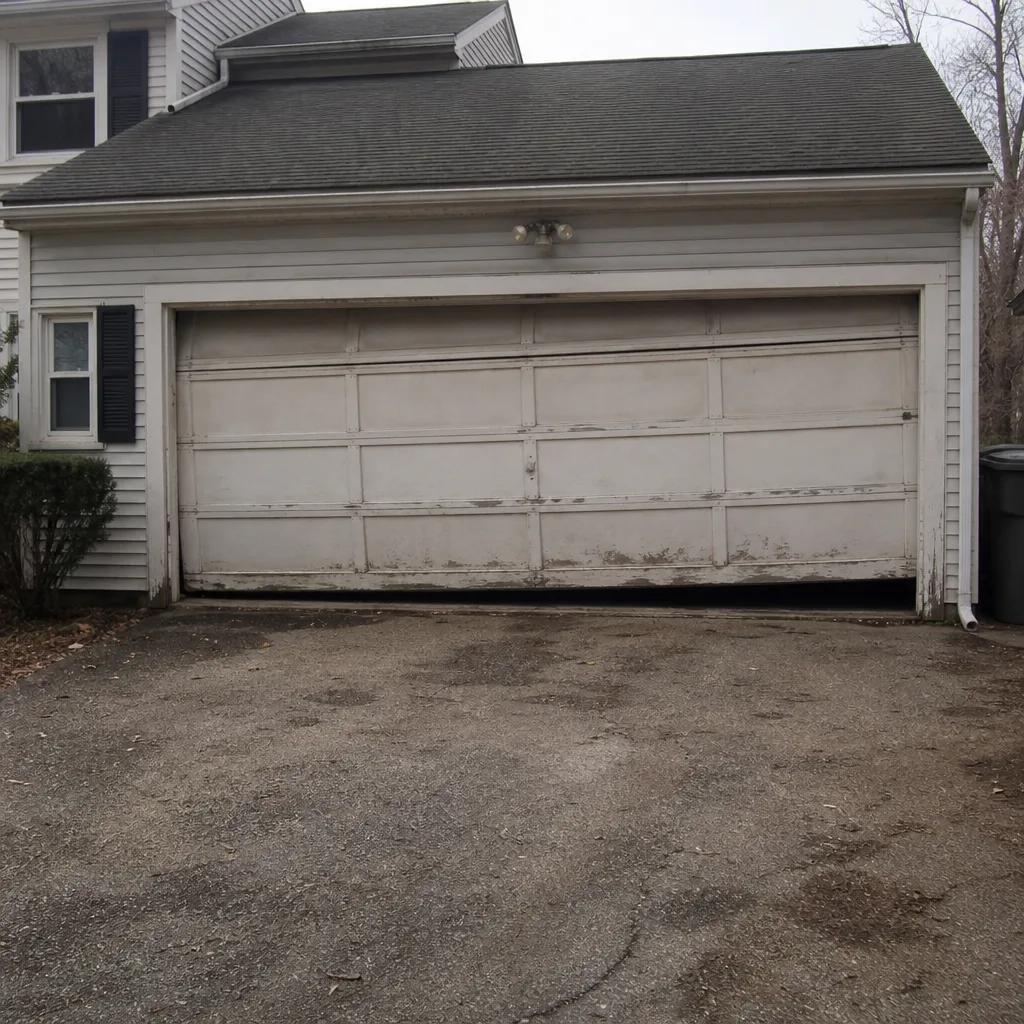 Before
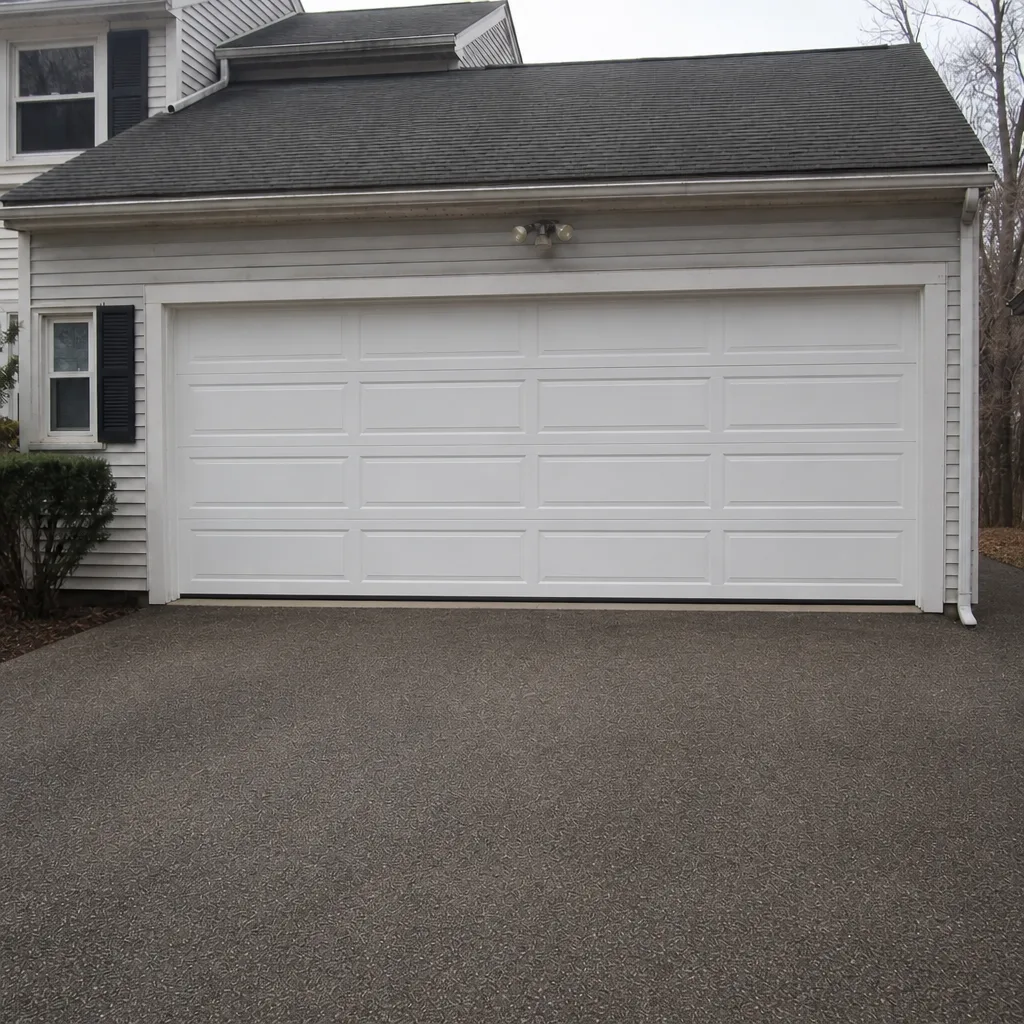 After
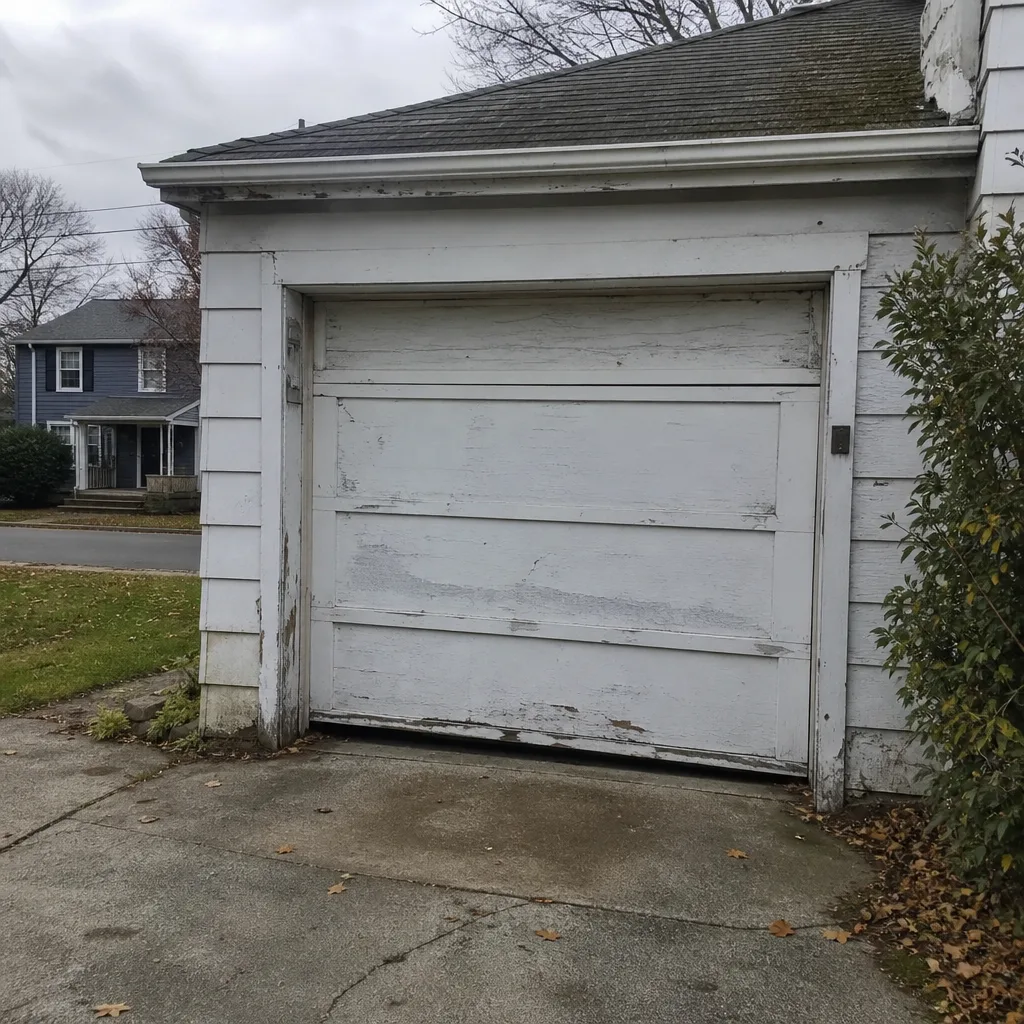 Before
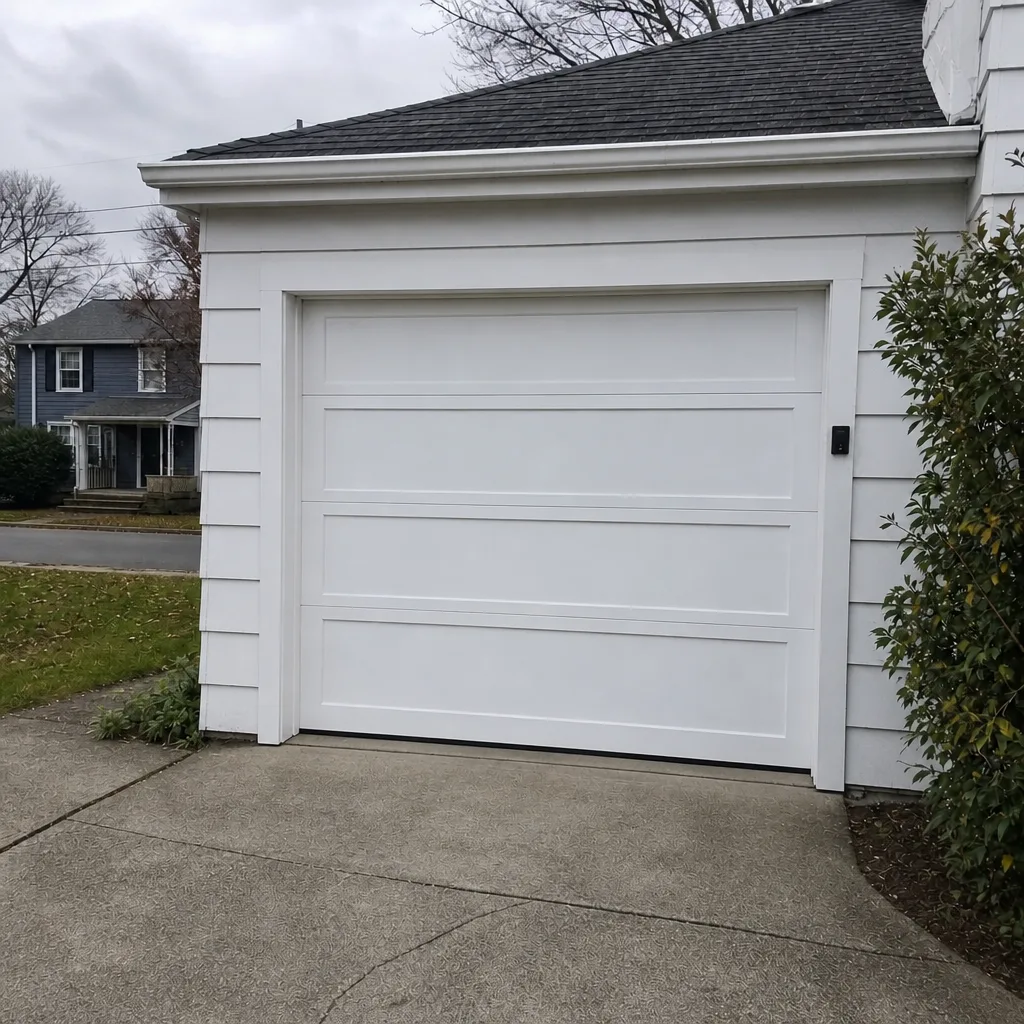 After
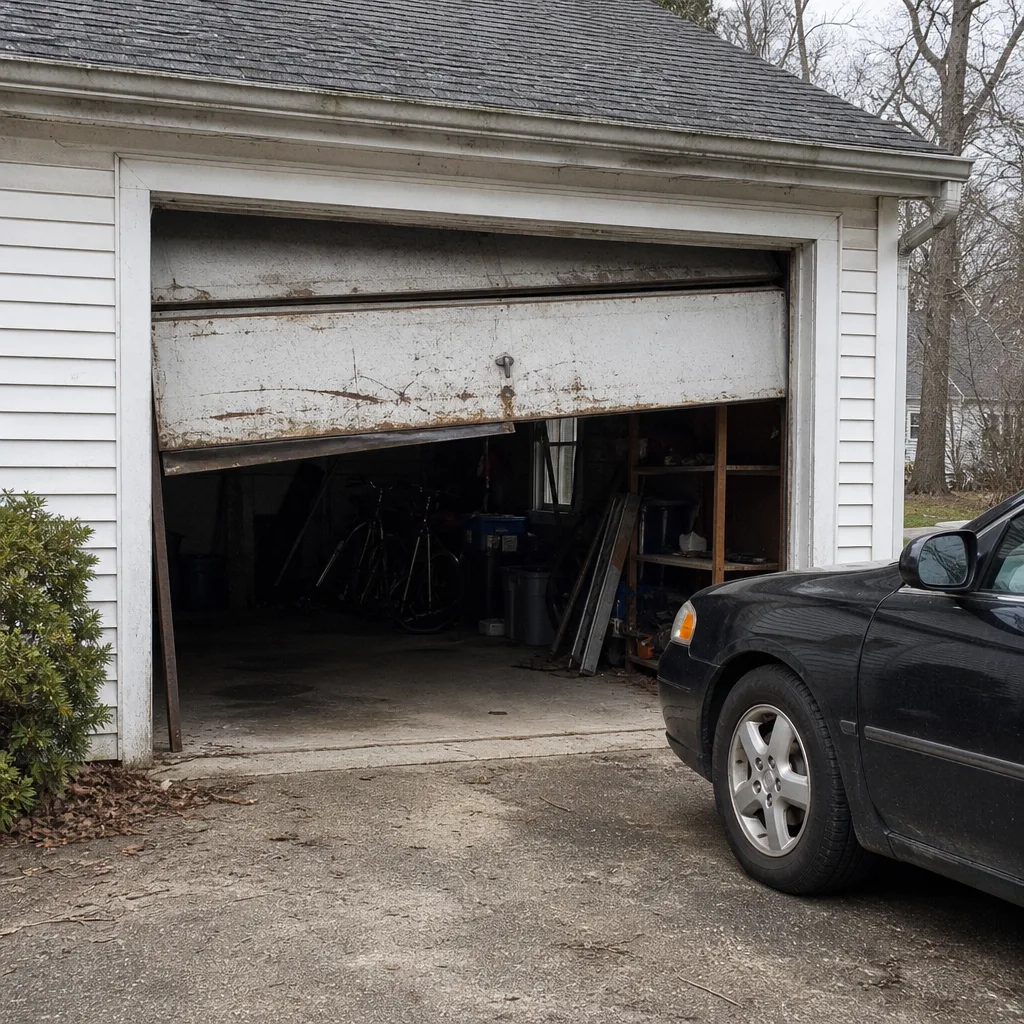 Before
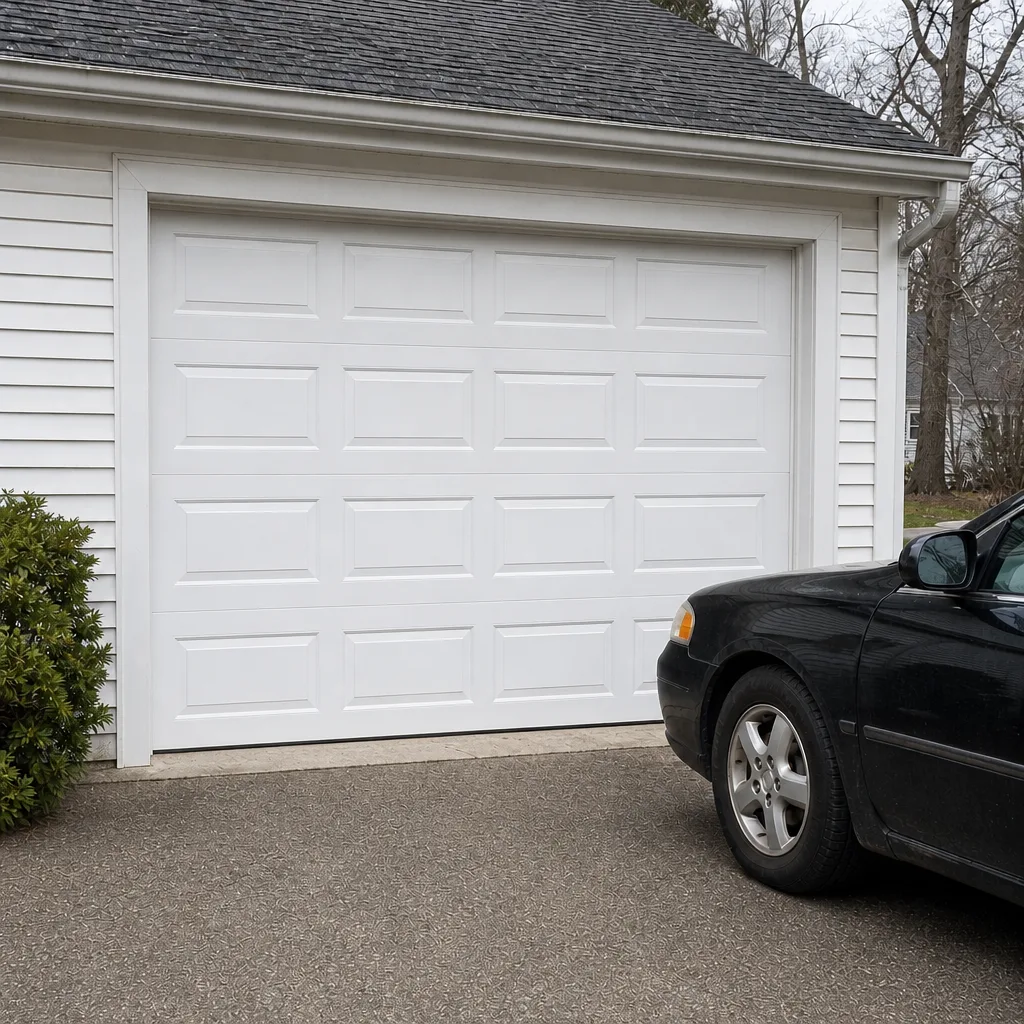 After
When to Call a Professional
Call a professional if the door has a broken spring, you can see frayed strands on any lift cable, the door is stuck and a car is trapped inside, the door opens or closes unevenly or won’t stay in a track, or the opener runs but the door doesn’t move after the emergency release is re-engaged. Those are the patterns where a DIY attempt moves into hazard territory. For sensor, lubrication, and limit switch work, you’re fine on your own. For everything above the line, Stamford Garage Door Repair Pros offers free estimates in Stamford – call (855) 337-1686. We work on the brand already in your garage, and our technicians have up to 13 years of experience covering springs, openers, panels, and full-door installations. If your door fails and a car is trapped or the home is left unsecured, we offer emergency service the same day. Prices are quoted and agreed before any work starts, so you won’t get a bill that doesn’t match the number you approved.
Frequently Asked Questions
Typical repair costs in Stamford range from $120 to $500 depending on the component – a safety sensor fix or limit adjustment sits at the low end, spring replacement and opener repair in the middle, and cable-plus-spring jobs at the high end. We quote every job in writing after the diagnosis and agree the number with you before any work begins. Call (855) 337-1686 for a free estimate.
For emergency failures – a door stuck down with a car trapped, a broken spring, or a snapped cable – same-day service is available in most cases. Sensors, lubrication, and non-urgent tune-ups can be scheduled the same day or next. Call (855) 337-1686 and we’ll confirm a window when you book.
No. The written estimate we agree to before any work starts is the price. If the diagnosis at the door uncovers something the phone call couldn’t, we tell you, quote the additional item separately, and you approve or decline before any work happens on it. We don’t start a job with an open-ended price.
The local pro assigned to your job is licensed and insured as their state requires. We connect you with an independent local professional, and we ask them to bring that documentation with them. Call (855) 337-1686 and we’ll answer any credential questions before we book.
Almost always a safety sensor problem – misalignment, dirt on the lens, or an obstruction in the photo-eye beam. Check that both sensor LEDs are steady, wipe the lenses, and re-aim until they settle. If the door still reverses, the opener’s limit or force setting may need adjustment, which the opener manual walks you through. If it persists, call (855) 337-1686 and we’ll diagnose it – sensor parts are usually a fast fix.
Run the emergency release and lift the door by hand. If it’s extremely heavy or won’t move, the spring is broken and the opener is fine. If the door lifts by hand and the opener runs but doesn’t move it, the release was simply disengaged. If the motor clicks or hums with a plastic grinding sound and the door lifts by hand, the opener’s drive gear is likely stripped. Call (855) 337-1686 for a trained diagnosis.
Yes. We work on LiftMaster, Chamberlain, Genie, Clopay, Amarr, Wayne Dalton, Craftsman, and Raynor – eight of the most widely installed brands in North America – plus modern smart openers like myQ and Aladdin. That means a brand-specific diagnosis rather than a generic guess. Call (855) 337-1686 and have your opener and door brand ready when you call.
The Bottom Line
Six failure patterns cover almost every garage door problem you’ll face in Stamford: a reversing door is usually the sensor, a door that won’t lift is usually the spring or the emergency release, grinding is rollers and tracks, and an opener that runs without moving the door is the drive gear or a disengaged carriage. Sensor alignment, lubrication, and limit adjustments are safe to handle yourself. Springs, cables, tracks, and opener internals are technician jobs, full stop. A broken door is your home’s largest moving part failing – treat it like it matters, get it diagnosed by component and brand, and call us at (855) 337-1686 for a free estimate in Stamford. We quote before we start and stand behind the price we quote.
Contact
Stamford Garage Door Repair Pros is your specialist for garage door repair, opener repair, spring repair, and full door installations across Stamford and surrounding communities. We work on eight of the leading garage door and opener brands, offer emergency service when a door fails and traps your car or leaves the house exposed, and quote every job in writing before the work starts. Call (855) 337-1686 for a free estimate today. Springs, openers, panels, full doors – one call covers it all, diagnosed by brand rather than by guesswork.
Written by the team at Stamford Garage Door Repair Pros.