Last updated November 20, 2026
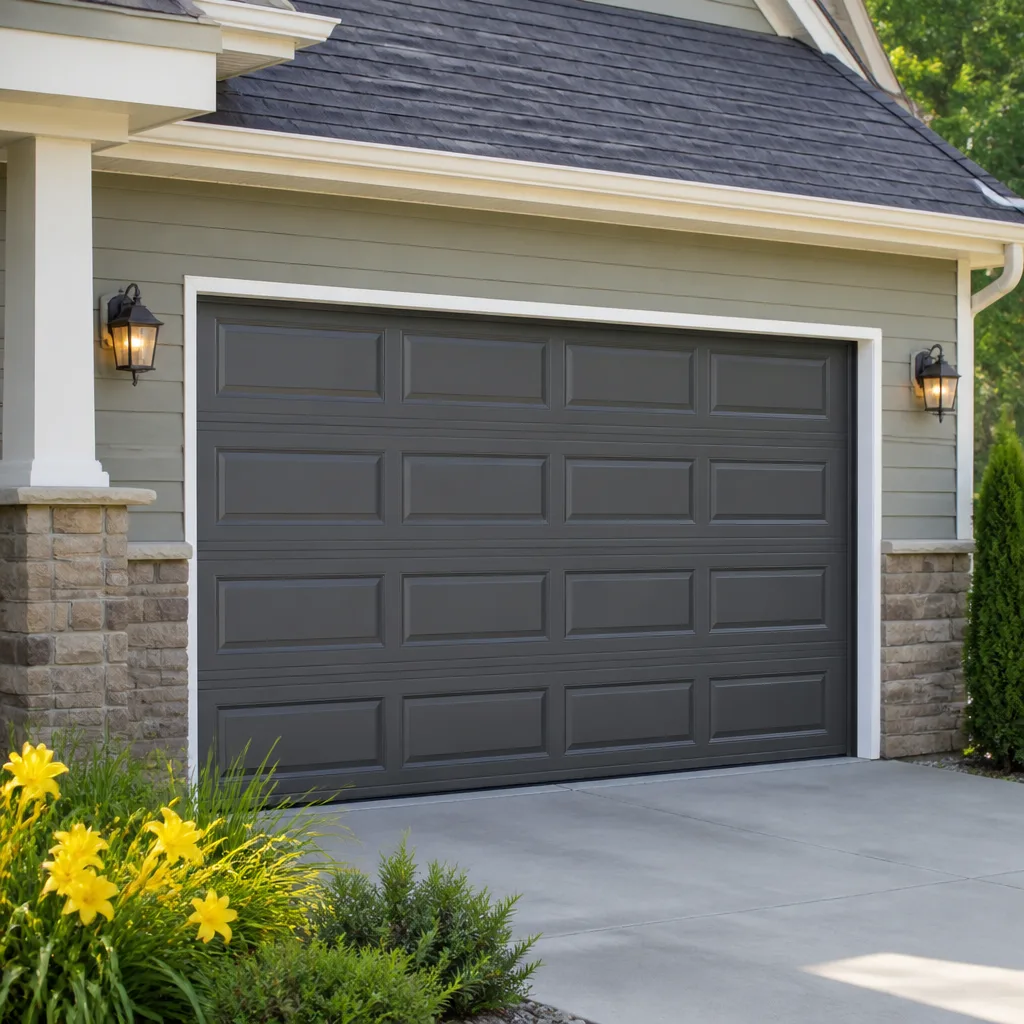 Raised-panel steel
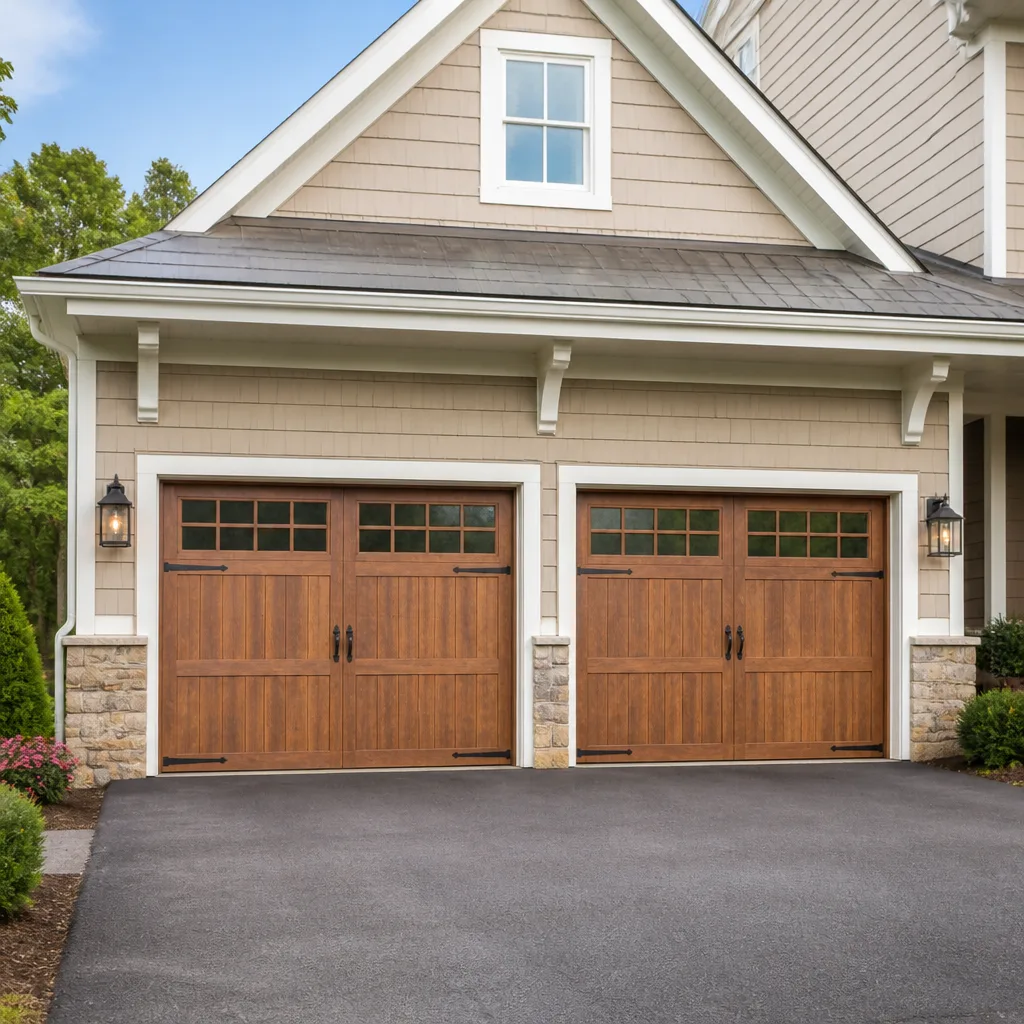 Carriage house
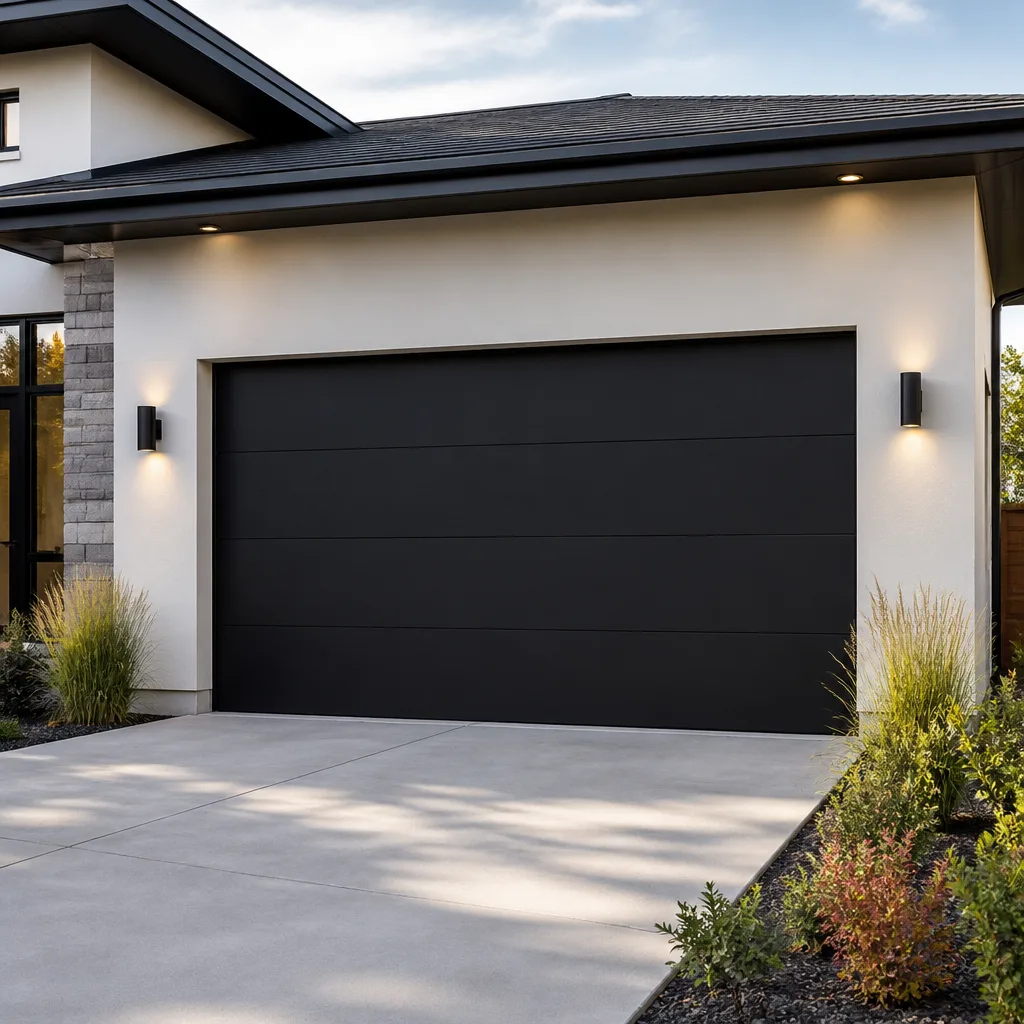 Modern flush
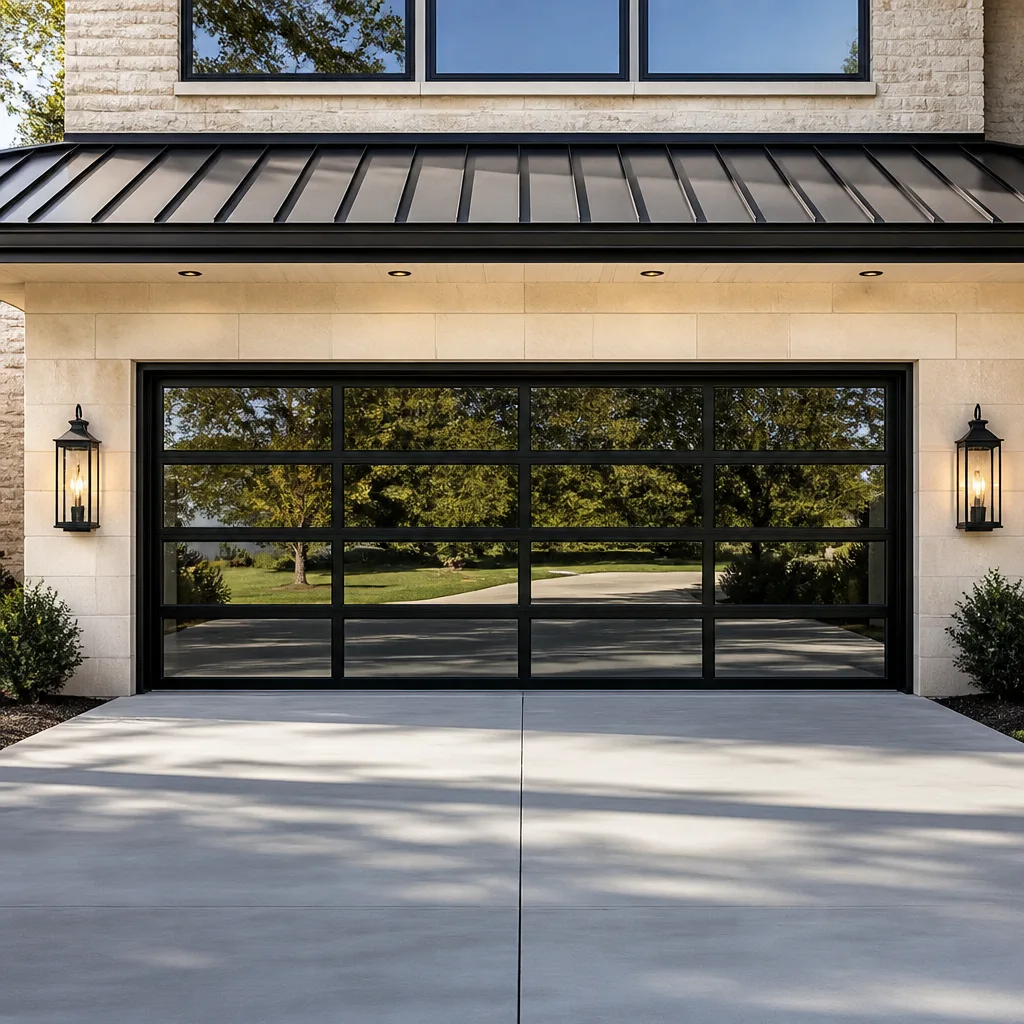 Full-view glass
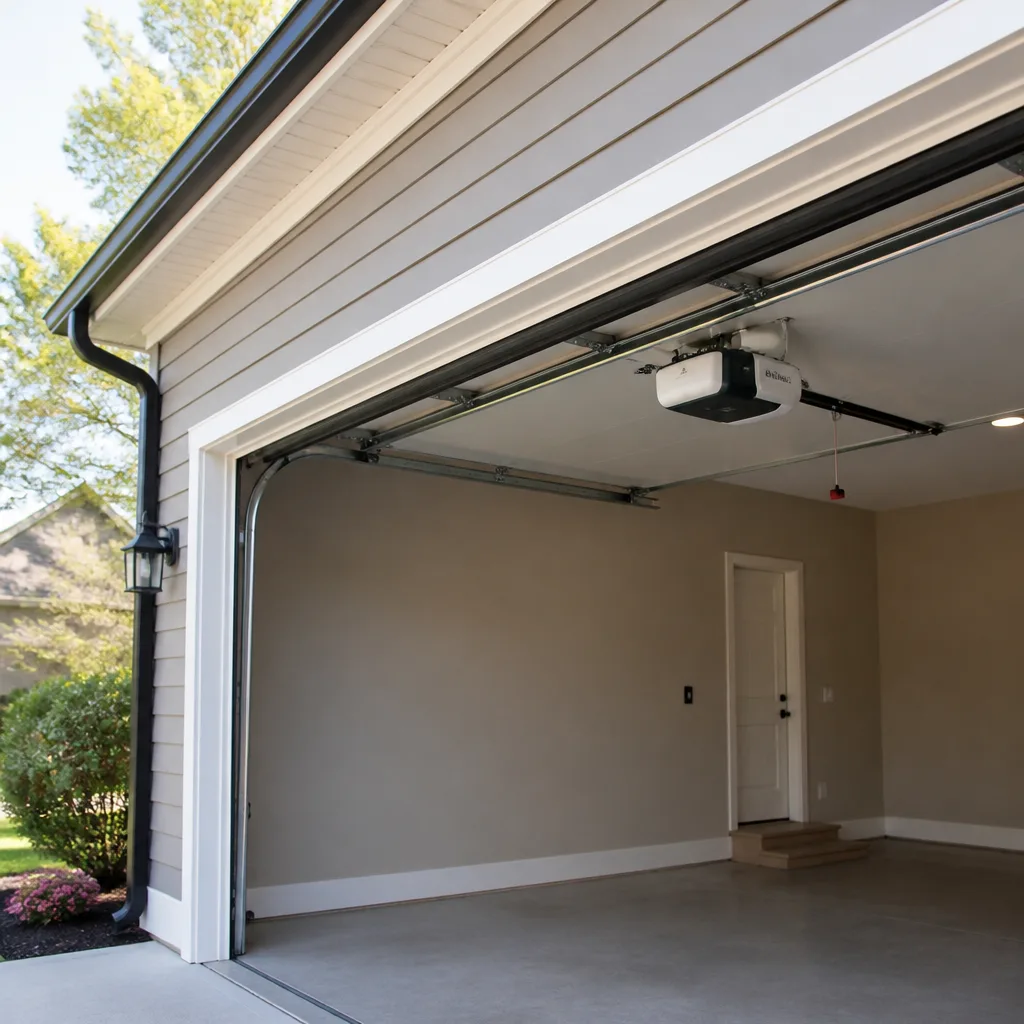 LiftMaster openers
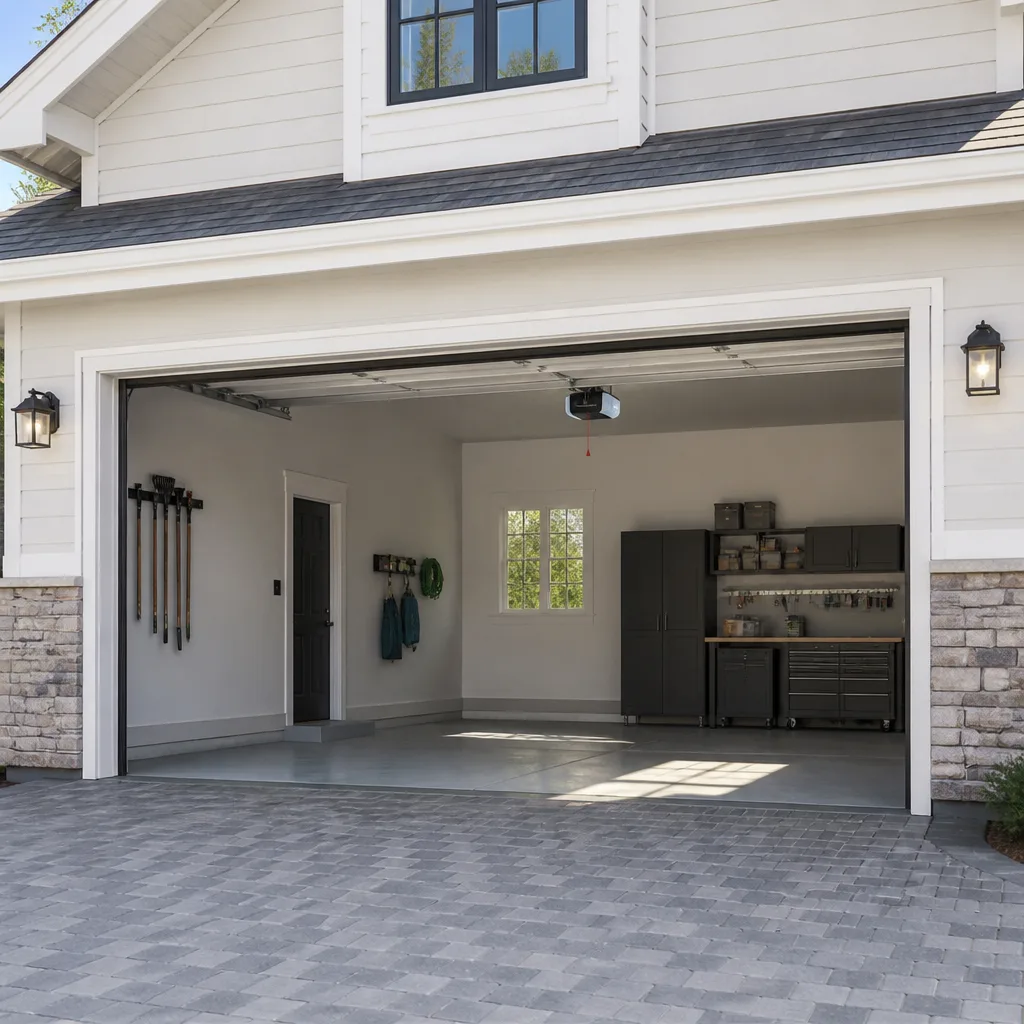 Chamberlain openers
Full 25-point door and opener safety check with every visit - springs, cables, rollers, tracks, and your LiftMaster or Chamberlain opener included
You get a price before we start. It does not change when the pro arrives.
Get your free estimateGarage Door Warning Signs: A Stamford Homeowner’s Reference Guide
A torsion spring doesn’t snap without warning. The door gets heavier. The opener strains audibly. The balance test fails. Most homeowners notice all three and do nothing, because nobody told them what those signs actually mean. In our experience across Stamford, the door that fails on a Tuesday morning usually started complaining weeks earlier and nobody connected the dots. This guide fixes that. You’ll learn to tell an opener symptom from a mechanical one, spot the “false safe” door that’s already running on a broken spring, and know exactly which signs mean wait and watch versus stop using the door today.
Quick Answer
Garage door warning signs fall into three urgency tiers: monitor-and-schedule (slow response, minor noise, weatherstripping wear), repair-within-the-week (grinding, uneven movement, a visible gap in the spring), and stop-using-the-door-now (a snapped spring, a frayed cable, a door that reverses before closing, or a door that opens with the opener carrying full weight). Catching a symptom in the first two tiers usually keeps the fix a repair rather than an emergency. Ignoring them is how a $200 problem becomes a damaged opener and a broken door.
Styles & brands we work with
- Raised-panel steel
- Carriage house
- Modern flush
- Full-view glass
- LiftMaster openers
- Chamberlain openers
Table of Contents
- Opener Symptoms vs. Mechanical Symptoms: Which One Are You Hearing?
- Slow Response and a Door That Struggles to Move
- Grinding, Squealing, and Popping: What Each Noise Tells You
- Uneven Movement and a Crooked Door
- Spring Warning Signs: The Gap, the Stretch, and the Snap
- The “False Safe” Door: Opening Fine on a Broken Spring
- Warning Signs Specific to Stamford Homes and Weather
- Your Escalation Guide: Monitor, Repair This Week, or Call Now
Opener Symptoms vs. Mechanical Symptoms: Which One Are You Hearing?
Most homeowners misdiagnose this, and it’s the single most common reason a service call ends up solving the wrong problem. The core rule: an opener problem shows up as an electrical or control symptom, while a mechanical problem shows up as weight, sound, or alignment. If the door is physically heavier or crooked, the opener isn’t the culprit no matter how loud it sounds. It’s simply straining to lift a door the springs and cables should be carrying.
Here’s how to sort the two apart before you call anyone in Stamford:
- Opener symptoms: the door doesn’t respond to the remote or wall button, the opener makes a hum or click but the door doesn’t move, the wall control blinks in a code pattern, or the door won’t stay closed after a recent power surge. These point to the opener, its logic board, its safety sensors, or its remote pairing. LiftMaster and Chamberlain myQ units and Genie systems each have their own diagnostics, which is why we diagnose by brand rather than by guesswork.
- Mechanical symptoms: the door lifts but sags on one side, the opener runs and the chain or belt moves but the door barely rises, the door drops the last foot, or you hear a loud pop from above. These point to springs, cables, rollers, or track alignment. The opener is fine. It’s overloaded.
- Overlap: sometimes both happen at once. A worn spring forces the opener to work harder, and the opener’s gear strips from the strain. That’s the scenario where fixing only the opener leaves you with the same failure in weeks.
If you’re hearing the opener strain while the door creeps up, resist the urge to replace the opener. It’s almost always a mechanical problem upstream. You can read more about how we separate the two in our guide to garage door opener repair. When the door itself is the issue, the symptoms travel through the opener and read like an opener failure, which is exactly why a proper diagnosis starts at the door.
Slow Response and a Door That Struggles to Move
A door that gets gradually slower is telling you something is loading up the system. When you press the button and there’s a pause before the door moves, or the door moves a few inches and stops, the delay is usually the opener’s motor working against resistance that shouldn’t be there. Left alone, this is the symptom most likely to take the opener down with it.
The most common causes of a slowly failing door:
- Worn or broken springs. A torsion spring loses tension over time. When it does, the opener carries load it was never built to carry. This is the top cause of a slow, heavy door.
- Dry or seized rollers and hinges. Metal rollers and hinges need lubrication. When they seize, friction increases and the door fights the opener on every cycle.
- Track misalignment. A track that’s been nudged out of plumb by a bump or a settling slab makes the rollers drag.
- A failing opener motor or capacitor. Less common, but a motor that’s losing torque shows up as exactly this symptom. LiftMaster and Genie units each age in their own patterns.
The balance test is the fastest way to tell if the problem is mechanical. With the door closed, pull the emergency release so the door is disconnected from the opener, then lift it by hand to about halfway. If it won’t stay put and drops on its own, the springs or balance are the problem. If it glides easily, the opener is the suspect. Don’t run the balance test if you’ve heard a loud pop or seen a gap in the spring; that door isn’t safe to release by hand. For sizing a repair once you’ve spotted the issue, our garage door repair page outlines what a typical fix involves in Stamford.
Grinding, Squealing, and Popping: What Each Noise Tells You
Noise is the most useful diagnostic signal you have, and it’s free. Different sounds point to different parts. If you can describe the exact noise, you can usually predict which component needs attention before anyone touches the door.
- Grinding. Usually rollers or the opener’s gear and chain drive. A stripped gear in the opener makes a rhythmic grinding that matches the motor’s rotation. Worn metal rollers make a constant rumble through the whole travel.
- Squealing. Dry hinges, rollers, or torsion hardware. This is a maintenance symptom, not a failure symptom. It’s also your cue that friction is climbing and the opener is gradually working harder.
- Rattling or banging. Loose hinge bolts, loose track brackets, or a door panel that’s come loose from its stile.
- A single loud pop, followed by a heavy door. This is the spring. A snapped torsion spring makes a sharp, unmistakable bang and the door becomes very heavy and usually won’t open. Stop operating it.
- Humming without movement. The opener’s motor is running but the door isn’t. Either the door is mechanically seized or the opener’s drive gear is stripped, and the two need very different fixes.
A squeaky door that gets progressively louder is the classic “monitor and schedule” case. A pop is not. The difference matters. In our experience across Stamford, the doors that fail at the wrong moment are the ones where a small squeal was left alone for a season, then a spring let go with the car inside. If you hear the pop, the door needs garage door spring repair, and starting a spring repair on your own is genuinely one of the most dangerous jobs in a house. The torsion bar holds enough stored force to cause serious injury if it releases unexpectedly.
Uneven Movement and a Crooked Door
A door that lifts with one corner higher than the other, or that sags noticeably on one side, is out of balance. The cause is almost always springs or cables, not the opener, and the misalignment gets worse with every cycle. A crooked door stresses the track, the hinges, and the opener motor simultaneously. Left long enough, it damages all three.
The most common causes of uneven travel:
- One spring doing more work than the other. A two-spring setup with one spring losing tension will visibly lift the door unevenly.
- A stretched or beginning-to-fray cable. A cable that’s slipping on its drum will pull the door up short on one side.
- Track out of plumb. The door follows the track. If one side leans, the door leans.
- A bent roller or broken hinge. Localized damage to one side creates drag that lifts the door unevenly.
Uneven movement is a repair-within-the-week symptom. It’s not usually an emergency, but it’s genuinely not something to leave for a month. The strain on the opener is real. On a LiftMaster or Chamberlain opener with a belt or chain drive, the motor will eventually strip its gear trying to force a crooked door through the track. If you’re in Stamford and the door looks noticeably off-level, that’s the point to schedule rather than wait.
Spring Warning Signs: The Gap, the Stretch, and the Snap
Torsion springs are the highest-tension part of the whole door system, and their warning signs are the ones most worth learning. A torsion spring that’s failed or failing announces itself in three specific ways, and one of them is visible from the ground with the door closed.
- A visible gap. Look at the torsion spring above the door, wound around the steel shaft. A healthy spring is one continuous coil. A spring with a clear gap of an inch or more in the coil has failed or is failing. That gap is the spring already broken.
- A stretched extension spring. If your garage uses extension springs (the springs running along the horizontal track on each side), a spring that’s longer than its partner has lost tension and is close to failing. Extension springs carry stored energy even at rest.
- The snap. A sharp bang from the garage followed by a door that won’t open, or that opens only with the opener straining audibly. This is the moment the spring breaks. The door is now running on the opener alone.
Spring replacement is a specialized job and one we treat as a named service, not an afterthought. When we quote a spring repair in Stamford, the price is for one spring; a matched pair is usually replaced together, so a pair costs about twice the single-spring price. Our team of technicians has up to 13 years of experience so the job is sized correctly. The bottom line on springs: if you can see a gap or hear the pop, stop using the door and get it looked at. If the spring looks intact but the door is heavy, the balance test above will tell you whether the spring has quietly failed.
The “False Safe” Door: Opening Fine on a Broken Spring
This is the sign that catches homeowners most often, and it’s worth its own section. A door can open and close on a broken spring. The opener lifts the door against the resistance of a failed spring and succeeds because the opener has enough torque to do it. The door looks fine. It isn’t. The opener is carrying the full weight of a door it was never designed to lift alone, and it’s slowly destroying itself.
How to identify a false-safe door:
- Listen to the opener. If the opener strains, groans, or gets louder on the way up than it used to, it’s carrying load. A healthy door on healthy springs is nearly silent through the opener.
- Disconnect the door and test it by hand. With the door closed, pull the emergency release and lift the door manually. Healthy springs let a grown adult lift a residential door with one hand and hold it halfway. A broken or failing spring makes it fight you.
- Watch the lowering. A door on healthy springs lowers under control. A door on a broken spring often drops the last foot with a thud because there’s nothing slowing it.
- Check for a gap. The gap in the torsion spring above the door tells you the truth even when the door appears to work.
A false-safe door is not a monitor-and-watch situation. It’s a stop-and-schedule situation. Every cycle puts load on the opener that isn’t supposed to be there. In our experience with Stamford homes, the false-safe door is the one that produces the “my opener died after my spring snapped” call, because the two failures happen one after the other. If you suspect the spring has failed, don’t run the door to test it further. Call for a same-day repair visit.
Warning Signs Specific to Stamford Homes and Weather
Stamford’s climate puts specific pressures on garage doors that a homeowner in a milder or drier place never sees. The four-season swing here means doors are asked to work in summer heat and winter cold, and the transition seasons are when wear shows up.
The Stamford-specific signs worth watching for:
- Rust streaking on the cables. When a cable shows orange or brown streaking along its length, moisture is reaching the steel and corrosion has started. Rusted cables fray and snap, and a snapped cable on one side of the door is a genuine safety event. Rust streaking on a Stamford cable is an early corrosion indicator, not cosmetic.
- Brittle weatherstripping in fall. The bottom seal and the perimeter weatherstripping on a Stamford garage door harden through the summer and crack in the fall. Brittle weatherstripping is your leading indicator of a winter seal failure, which lets cold air and moisture into the garage and, on many homes, into the room above it. Replace brittle seals in fall rather than winter.
- Doors that stiffen in cold snaps. When the temperature drops sharply, rollers get tighter, grease gets thick, and hinges get stiff. A door that struggles in a cold snap isn’t malfunctioning; it’s revealing that it was marginal all summer and needs maintenance now.
- Track movement from the freeze-thaw cycle. Concrete slabs and the wall framing around garage openings move through the freeze-thaw cycle, and a track that was plumb in August can drift slightly by March. If the door binds in spring, check the track.
- Seasonal opener strain. Wi-Fi-connected openers like Chamberlain myQ and Genie Aladdin report their own diagnostics through the app. A pattern of forced cycles or increased travel time tells you the door is loading the opener. That’s a signal to check the mechanical side, not to replace the opener.
Stamford homes also come in very different construction eras, and that matters. A mid-century ranch in the Cove or a newer build in the Springdale and Glenbrook neighborhoods can have very different track configurations, spring types, and panel construction. Where a door lives in Stamford determines a lot about the failure pattern, and it’s one reason we like to hear what neighborhood you’re in when you call.
Your Escalation Guide: Monitor, Repair This Week, or Call Now
Every warning sign fits into one of three tiers. Getting this right is the difference between a routine repair and an emergency call your family didn’t need. Sort the symptom you’re hearing into the right tier before you decide what to do.
The three tiers, with the signs in each:
- Monitor and schedule. Slight squealing that gets louder over weeks. A door that seems marginally slower than it used to. Weatherstripping that’s cracking but still seated. Opener remote that needs to be pressed twice. These are maintenance symptoms. Schedule the tune-up and lubrication on your own timetable.
- Repair this week. A grinding noise. Uneven movement. A door that won’t stay level in the balance test. A visible gap in the spring with the door still working. Brittle weatherstripping in fall. Rust streaking on the cable. These are failures in progress. Book a repair within the week rather than the hour, but don’t leave it for a month.
- Stop using the door and call now. A pop and a heavy door. A visible spring gap with a door that will no longer hold itself up. A broken cable. The door reverses before closing. A door that drops the last foot. A door that looks crooked in the track. Don’t manually lift or force the door if you’re in this tier. Don’t run the opener to see if it recovers. Call for emergency service.
For the third tier, we offer same-day and emergency service for the situations where a failed door is trapping a car or leaving the house open. Our technicians are dispatched from 7am to 7pm, and the price on an emergency call is quoted and agreed with you before any work starts. On any tier, the estimate is free and the written quote sets the final price.
Common Mistakes to Avoid
- Replacing the opener when the door is the problem. A straining opener is almost always reacting to a heavy door. Replacing the opener without fixing the springs or cables leaves you with the same failure again and a new opener that’s about to be destroyed.
- Running a door with a popped spring “just to get the car out.” Every cycle on a broken spring forces the opener to lift the full door weight. The opener will fail next, and the cost goes from a spring repair to a spring plus opener.
- Treating a strained door as an opener tuning problem. Adjusting the opener’s force limit to push through a heavy door masks the real issue. The force setting is a safety adjustment, not a fix.
- Ignoring rust streaking on cables because the door still works. Rusted cables fray and snap. A snapped cable on a Stamford door is a safety event, not a symptom to wait on.
- Leaving weatherstripping till winter. In Stamford, brittle weatherstripping in fall is your warning that a winter seal failure is coming. Replace it before the season turns, not after the cold air gets in.
- Googling “loud garage door” at 7am instead of reading the signs on Saturday. The loud door at 7am usually made its first noise weeks earlier. Run the balance test and check the spring gap on a weekend when the garage is quiet, not when you’re already late.
- Trying to adjust or replace torsion spring hardware yourself. The torsion bar stores enough force to cause serious injury. A trained professional should do any work on the spring system.
See the difference
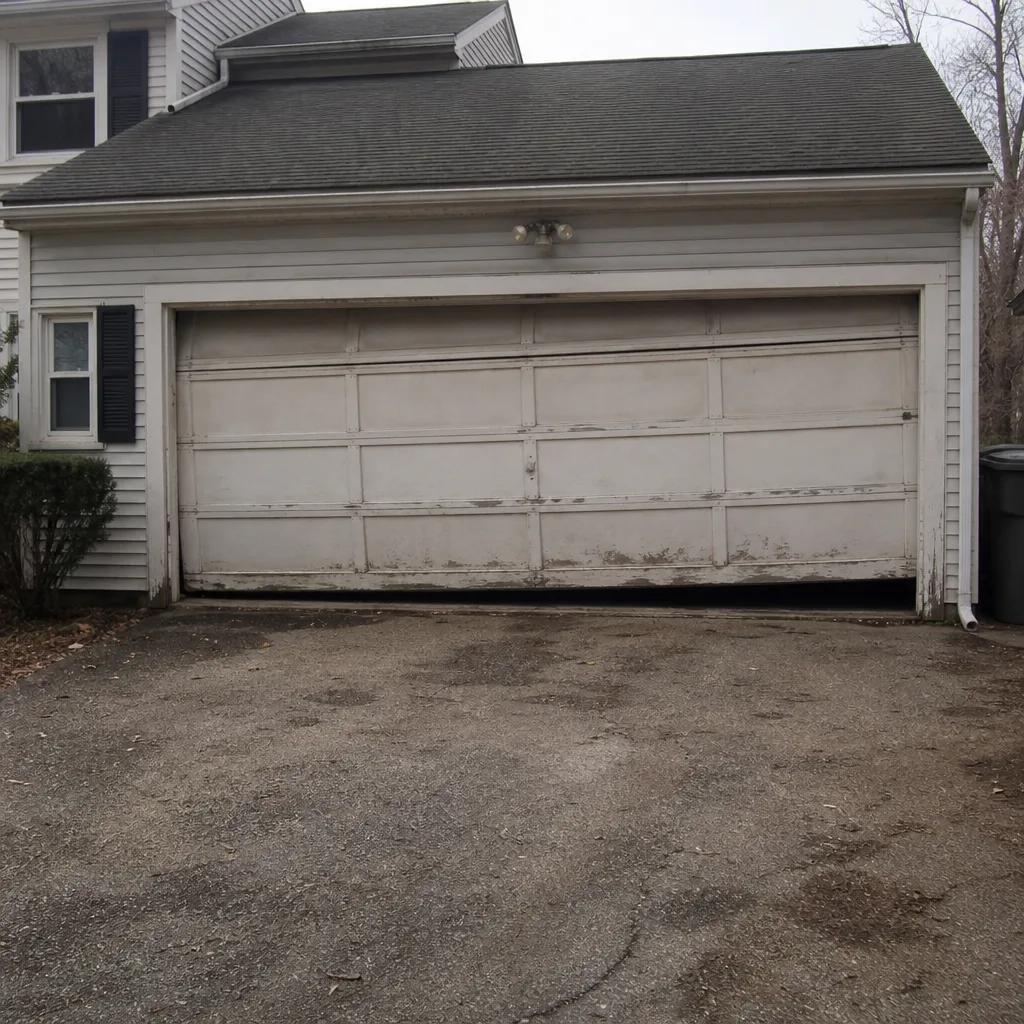 Before
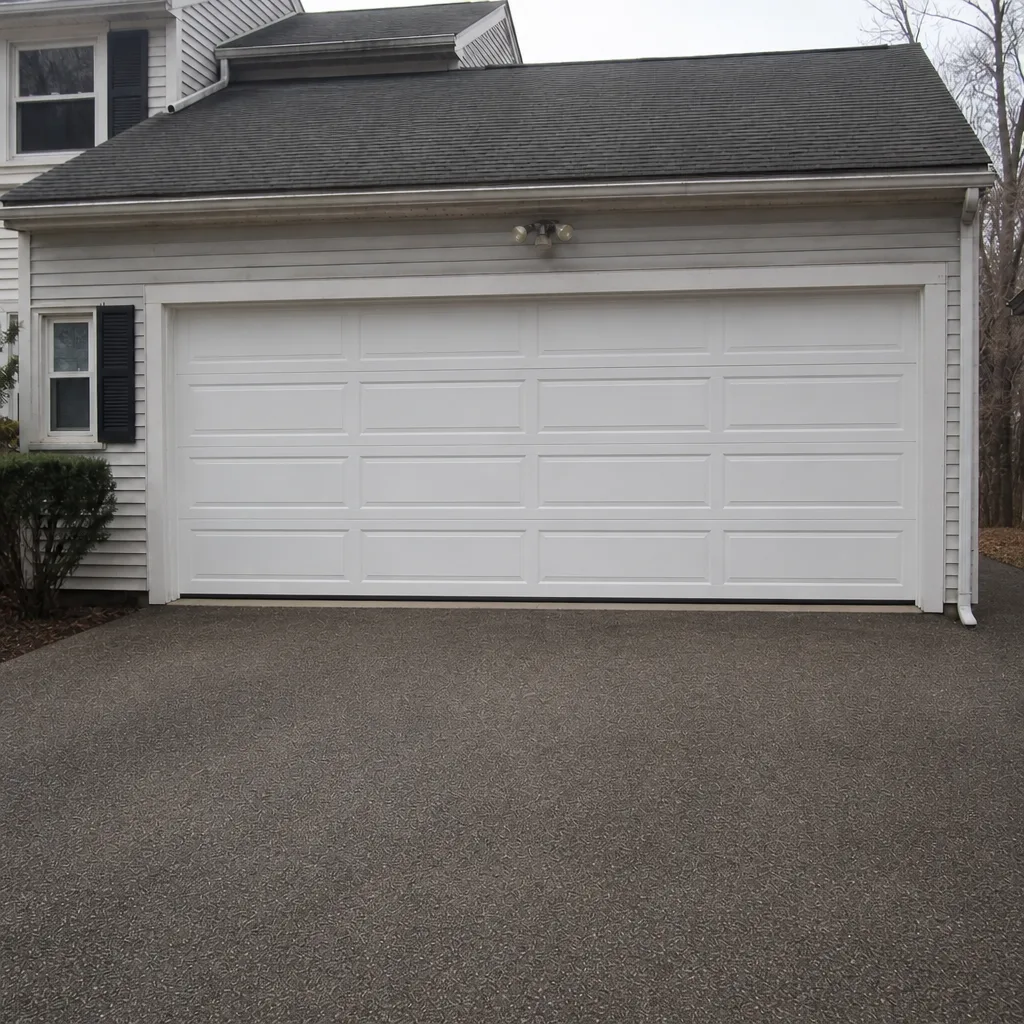 After
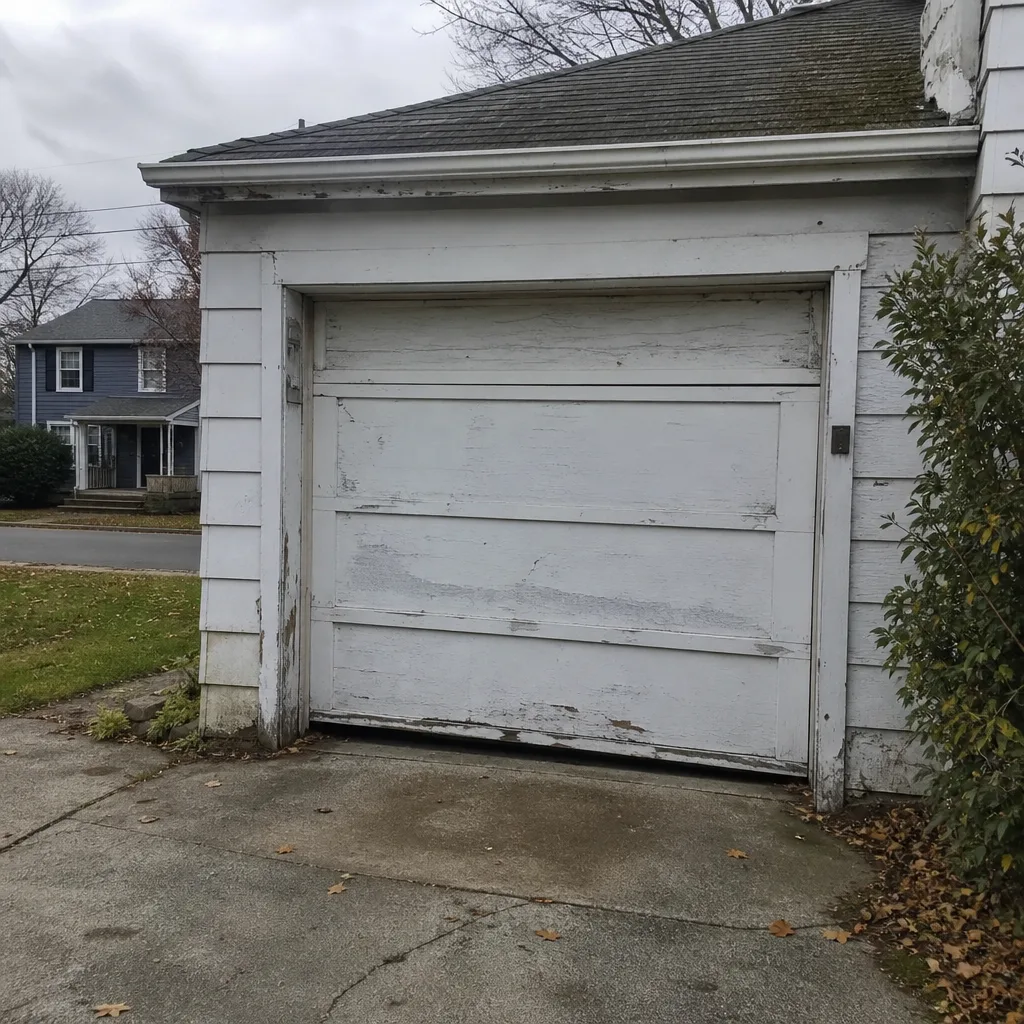 Before
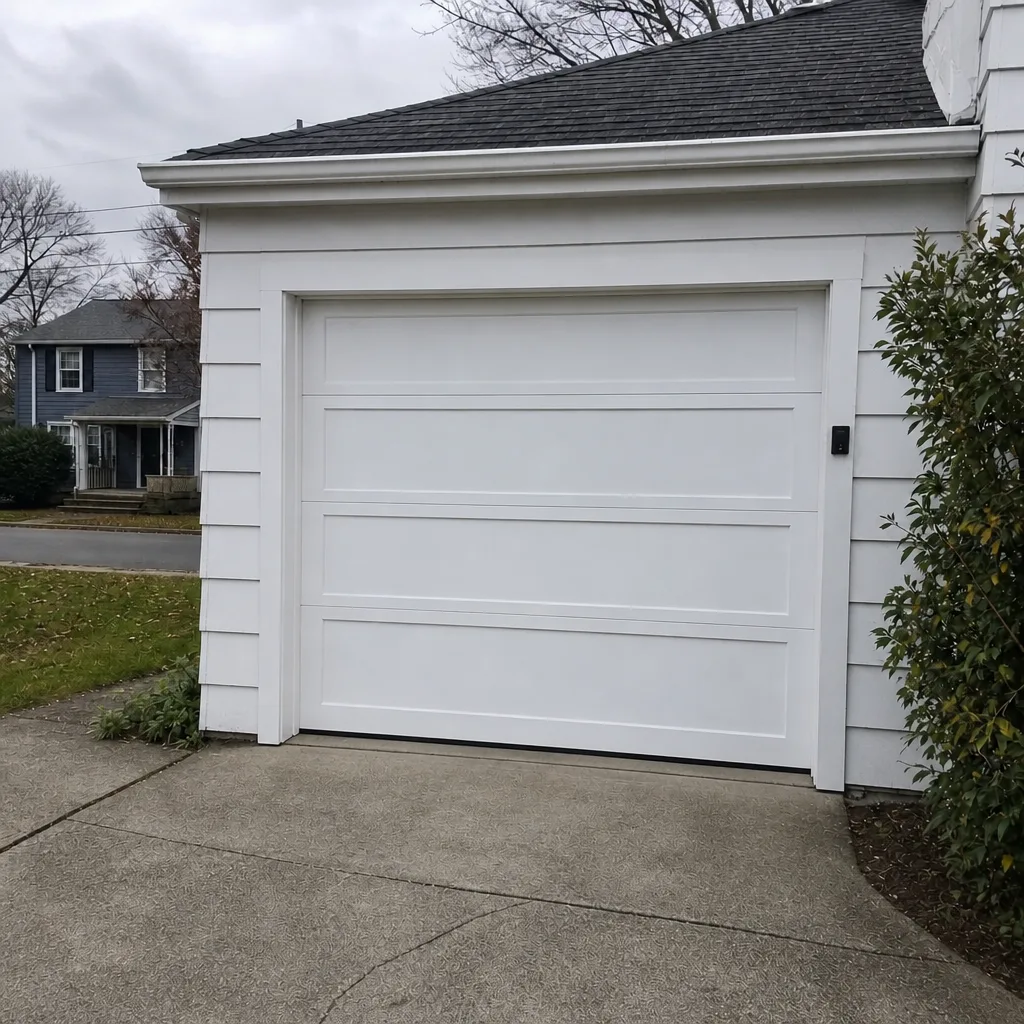 After
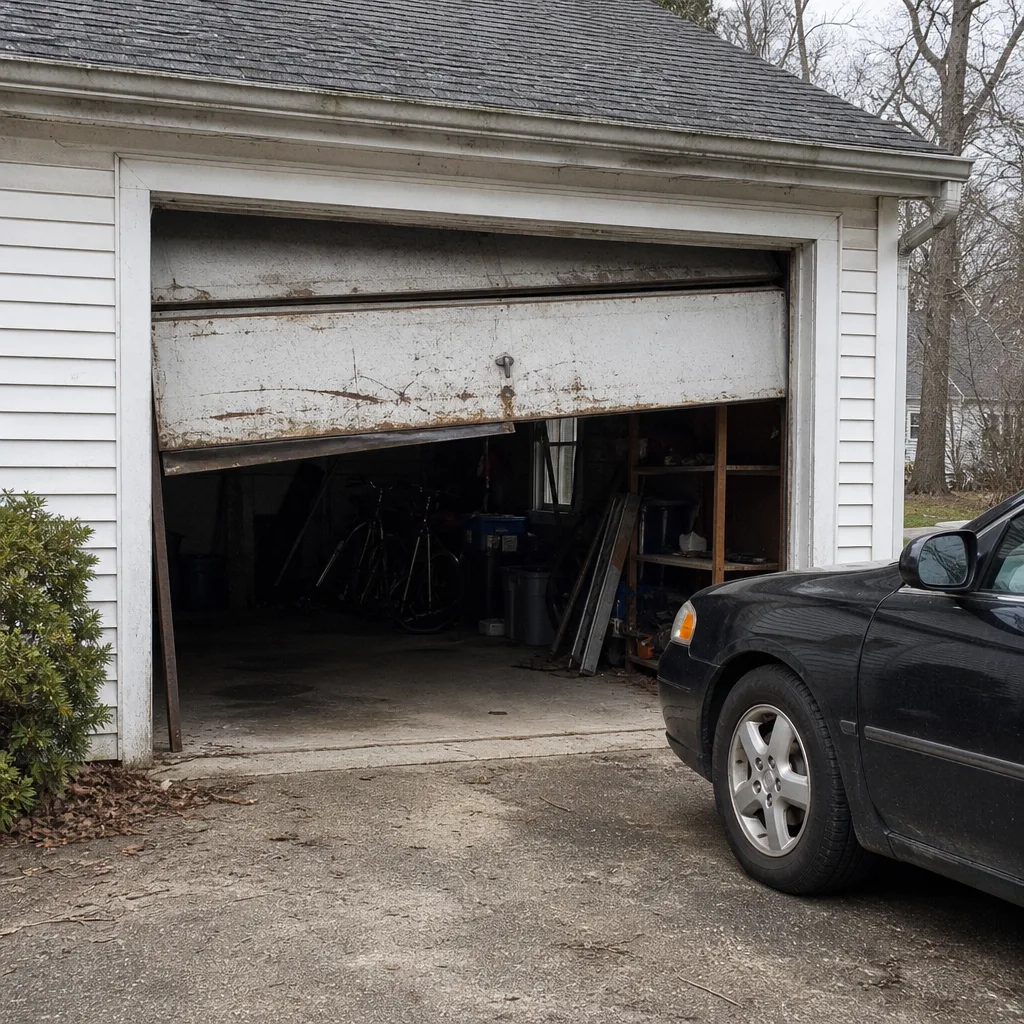 Before
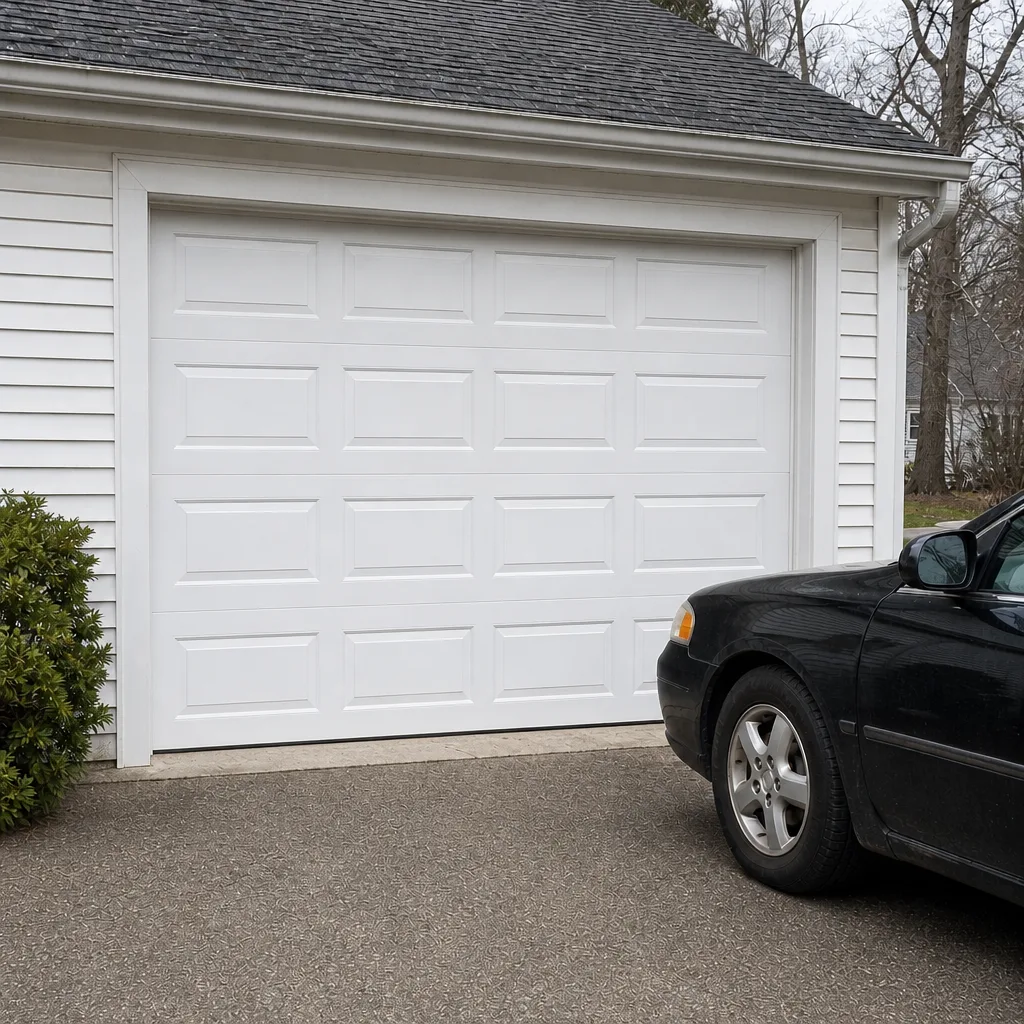 After
When to Call a Professional
Call us if any of the following is true: the door won’t lift or drops on its own in the balance test; a spring shows a gap or a cable shows rust; the door reverses before closing; the opener strains audibly or runs without moving the door; the door is uneven, crooked, or off the track; or the door simply makes a sound you’ve never heard before and the garage is where your family parks. For any of these, don’t try to run the door “just to see if it recovers.” The risk is the opener, the spring, or a falling door panel. Stamford Garage Door Repair Pros offers free estimates in Stamford. For a repair or an emergency situation, call (855) 337-1686 and we’ll work out the fastest available window. For a replacement or a new-door conversation, we schedule a measure and a written price rather than promising same-day turnaround, because that work is measured and ordered.
Frequently Asked Questions
Spring repair in Stamford typically runs around $180 to $340 for a single torsion spring, and a matched pair of springs usually costs about twice that because they’re replaced together. Extension springs and heavier doors can push the range higher. The written estimate you receive before any work starts is the price; the range is a guide, not a quote. Call (855) 337-1686 for an exact quote, and estimates are free.
Yes for repair and emergency situations. A door stuck shut, a snapped spring, or a broken cable that leaves a car trapped or the house open is what our emergency service is for. We dispatch from 7am to 7pm, and you’ll get the fastest available window when you call. Installation and replacement are scheduled after a measure, not same-day. Call (855) 337-1686 to book.
No, not if the price was quoted and agreed before work started. That’s the standard we hold to. The estimate is free, the written quote sets the final number, and any change to scope is agreed with you before we continue. If the diagnosis turns up something the estimate didn’t cover (a stripped opener gear behind a heavy door, for example), you’ll hear it as a new quote, not as a surprise on the invoice. Call (855) 337-1686 for a free estimate.
The local professionals we connect you with through Stamford Garage Door Repair Pros are licensed and insured as Connecticut requires. Our technicians have up to 13 years of experience, and we work on the brand already in your garage, whether that’s a LiftMaster opener, a Chamberlain myQ system, a Genie Aladdin, or a Clopay, Amarr, Wayne Dalton, Craftsman, or Raynor door. Call (855) 337-1686 with your brand and the symptoms and we’ll match the right service.
Yes. A door on a broken spring can still open, because the opener has enough torque to lift the door alone. That’s the false-safe door: it works, but the opener is carrying weight it was never designed to carry and will eventually fail. Pull the emergency release on a quiet weekend and test whether the door holds itself halfway up. If it drops, the spring is failing even though the door runs. Call (855) 337-1686 for a same-day check.
Watch for weight and alignment, not sound. If the door is heavy, uneven, or drops in the balance test, it’s a mechanical problem (springs, cables, track, rollers) and the opener is just reacting. If the door is light and level but doesn’t respond to the remote, makes a click without moving, or the wall control blinks a code, it’s the opener. Our guide to garage door opener repair walks through the diagnostics for each brand. When in doubt, call (855) 337-1686, and we’ll diagnose by brand rather than guesswork.
The Bottom Line
Garage door failures announce themselves. The slow door, the grinding door, the door with a visible spring gap, the door running on a broken spring while the opener carries the load: each of these is a warning, and each one has a place in the three-tier escalation guide. The balance test and the spring-gap check are the two five-minute checks worth learning, and both will tell you more about the door than the sound alone. In Stamford, watch for rust streaking on cables and brittle weatherstripping in fall, because those two signs are specific to the climate here. When you’re not sure which tier a symptom belongs in, call. The estimate is free, and the written quote is the price. You can also read our guide to garage door spring repair and our overview of Stamford Garage Door Repair Pros for more on how we approach each service.
Whether it’s a spring, an opener, a panel, or a door that’s reached the end of its life, one call covers it all. Call (855) 337-1686 for a free estimate on a repair, a scheduled measure for a replacement, or emergency service when the door won’t budge.
Written by the team at Stamford Garage Door Repair Pros.