Last updated November 20, 2026
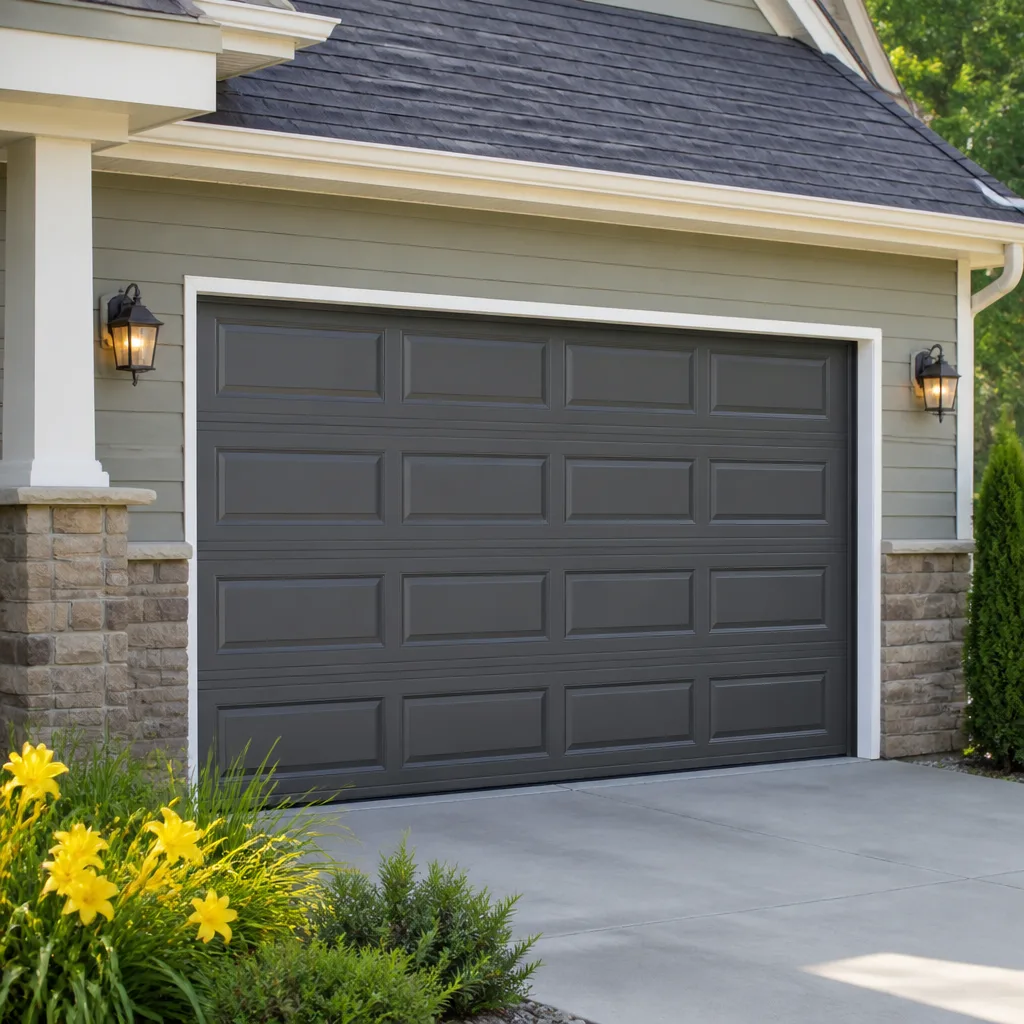 Raised-panel steel
 Carriage house
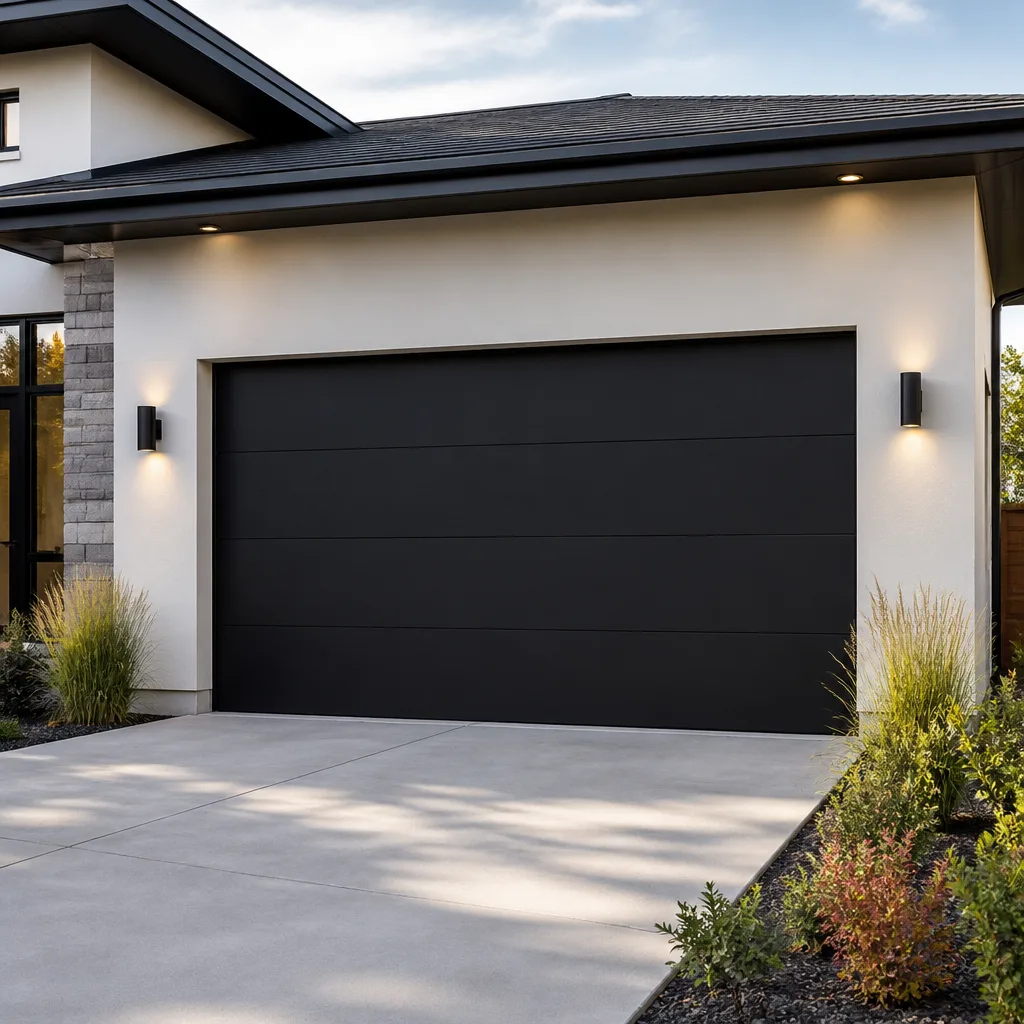 Modern flush
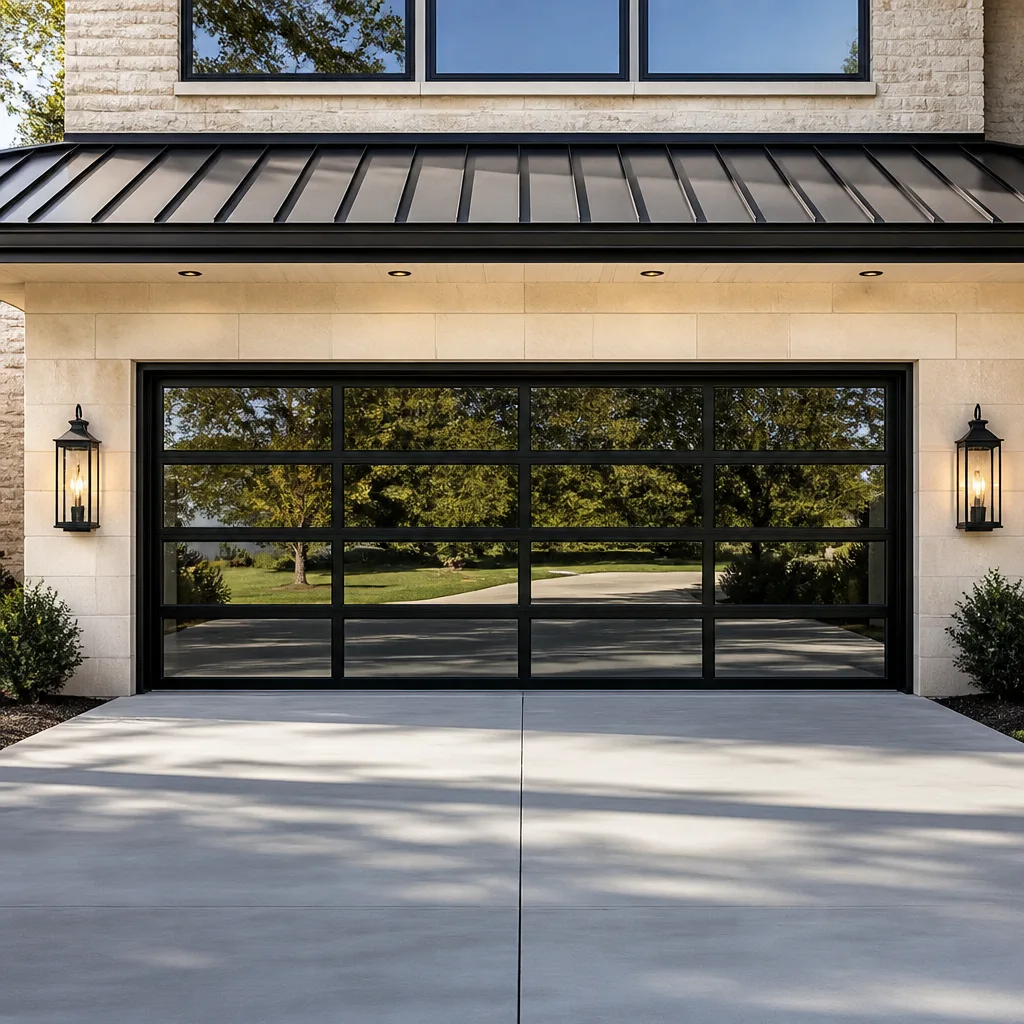 Full-view glass
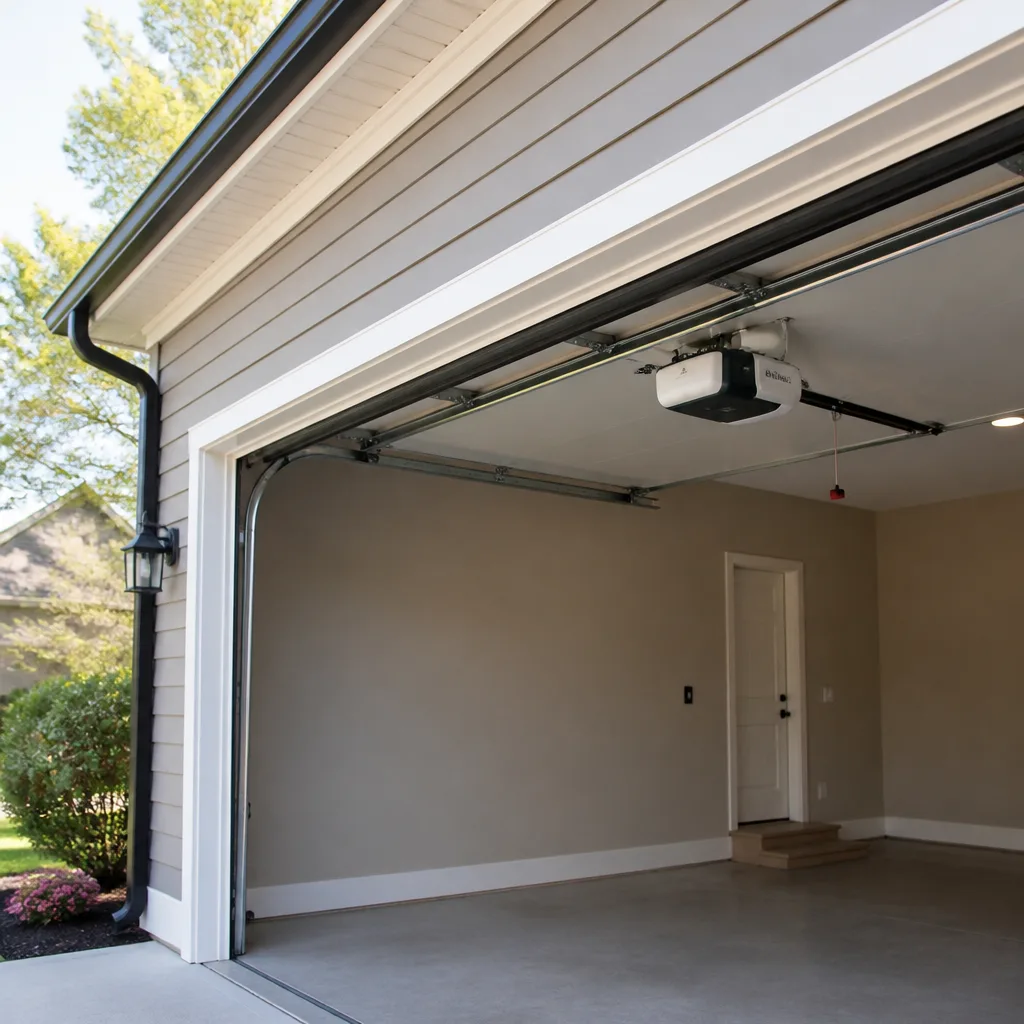 LiftMaster openers
 Chamberlain openers
Full 25-point door and opener safety check with every visit - springs, cables, rollers, tracks, and your LiftMaster or Chamberlain opener included
You get a price before we start. It does not change when the pro arrives.
Get your free estimateGarage Door Repair Maintenance Checklist for Stamford Homeowners
A loose cable drum and a worn bottom seal look like minor annoyances, right up until the cable lets go on a cold morning and that gap under the door quietly pushes your heating bill higher all winter. Most checklists you’ll find online are written for a climate that doesn’t exist here, so they miss the wear points Stamford homes actually develop. We built this one around them. You’ll get a month-by-month cadence, the tasks you can safely handle, the ones you shouldn’t touch, and a simple rule for deciding whether a noise is a quick fix or a call to a specialist. It’s written from Stamford, for Stamford.
Quick Answer
A proper garage door maintenance routine in Stamford runs on three cadences: monthly (lubrication, visual checks, the balance test), quarterly (weatherstripping, hardware torque, track alignment), and annual (spring and cable inspection, opener force and limit checks, full hardware review). Homeowners can safely do the monthly cleaning, lubrication, and balance testing. Anything involving spring tension, cable tension, or opener limit and force adjustments belongs with a trained technician. The two Stamford-specific items most generic guides skip are checking hardware for corrosion near the shoreline and inspecting the bottom seal before the November freeze seals a warped seal in place.
Styles & brands we work with
- Raised-panel steel
- Carriage house
- Modern flush
- Full-view glass
- LiftMaster openers
- Chamberlain openers
Table of Contents
- Monthly Checklist: Ten Minutes That Prevent Most Failures
- Quarterly Checklist: Seals, Tracks, and Hardware
- Annual Checklist: Springs, Cables, and the Opener
- What’s Different About a Stamford Garage Door
- The Balance Test: How to Do It Right
- Homeowner-Safe Tasks vs. Technician-Only Tasks
- What to Log and When to Call
- Common Mistakes to Avoid
Monthly Checklist: Ten Minutes That Prevent Most Failures
The monthly walkaround is where you catch the small stuff before it becomes an emergency call. Set a reminder on the first of the month, or tie it to something you already do, like changing the furnace filter. Ten minutes, no tools beyond a rag and a can of lubricant.
Start outside and work inward. Here’s the order that catches the most problems:
- Run the door and listen. Open and close it once from a few feet back. Note any grinding, squealing, popping, or uneven movement. Sound is the first warning you get.
- Look at the bottom seal. Check for cracks, tears, or sections that no longer touch the floor. Run a hand along it to feel for gaps.
- Check the tracks visually. Look for dents, bends, or debris. The door should move smoothly without the rollers jumping.
- Lubricate the moving parts. Apply a garage-door-specific lubricant to the rollers, hinges, and the torsion spring (a light coat, not a soak). Avoid heavy grease, which traps grit.
- Wipe down the hardware. A dry rag over hinges, brackets, and the bottom fixture removes surface grime before it holds moisture against the metal.
- Test the safety reverse. Place a roll of paper towels under the closing door. It should reverse on contact. If it doesn’t, stop using the door until a technician checks the opener.
- Do the balance test. Covered in detail below, but it takes thirty seconds and tells you a lot about the health of your springs.
In our experience, the two items homeowners skip most are the bottom seal and the balance test. Both are the cheapest things to check and the most expensive to ignore. A failing seal lets in cold air and moisture all winter, and an out-of-balance door wears your opener motor every single time it runs. If anything looks beyond a simple fix, our garage door repair team can look at it before it turns into a bigger job.
Quarterly Checklist: Seals, Tracks, and Hardware
Every three months, go a layer deeper. The quarterly check is where you catch the problems that develop slowly: a seal that’s starting to harden, a track that’s drifted out of plumb, or a bracket that’s worked itself loose.
Work through these four areas:
- Weatherstripping and bottom seal. Run your fingers along the entire perimeter seal on the sides and top, plus the bottom seal. Look for hardening, cracking, or sections that have pulled away from the frame. In Stamford, this check matters most in late autumn, before the first hard freeze.
- Track alignment. Stand at the door and sight down each vertical track. It should be straight and plumb. Any visible bend will drag the rollers and strain the opener.
- Hardware torque. Check the bolts and screws on the hinges and brackets. A quick turn with a socket or screwdriver catches the ones that have started to back out.
- Roller condition. Look at the rollers. Nylon rollers should be smooth and round. Steel rollers should spin freely without flat spots or wobble. Worn rollers are a common cause of noise.
The one item we’d flag for Stamford homes specifically is the bottom seal timing. Once the temperature drops and stays down, a warped or hardened seal sets in place and won’t reshape in spring. That’s why we tell people to inspect and, if needed, replace the seal before the November freeze, not after. It’s a small task that protects your heat and your door’s alignment.
The other quarterly habit worth building is a quick check of the opener’s response. If you notice the door moving slower, hesitating, or reversing for no clear reason, that’s your cue to have it looked at. Our garage door opener repair service covers the major opener brands, including LiftMaster and Chamberlain units, so diagnosing the issue by brand takes less guesswork than a generalist trying to figure it out from scratch.
Annual Checklist: Springs, Cables, and the Opener
The annual check is where a trained eye earns its keep. Several of these tasks involve components under high tension, and we’ll be clear about which ones you should not touch. For the rest, an annual review catches wear that monthly and quarterly checks can miss.
Here’s what an annual garage door review covers:
- Spring inspection. Look at the torsion spring above the door or the extension springs along the sides. Look for gaps, rust, or a stretched appearance. A spring that’s shedding rust or has a visible gap is a failure waiting to happen. Do not attempt to adjust or replace it yourself.
- Cable inspection. Check the cables for fraying, kinks, or slack. Cables under tension can snap; leave tension work to a technician.
- Opener force and limit settings. The opener’s force and travel limits should be checked and, if needed, adjusted by a technician. These settings control how hard the door pushes and where it stops, and they’re central to safe operation.
- Hinge and roller replacement. Any hinge that’s worn thin or roller that’s flat or wobbly gets replaced.
- Panel and finish check. Look for dents, rust spots, or paint failure on the door panels. Catching rust early in Stamford’s wet winters keeps a small spot from spreading.
- Safety sensor alignment. Confirm the photo-eye sensors on either side of the door are aligned and clean, and that the door reverses when the beam is broken.
Spring replacement is one of the most mechanically dangerous jobs in a home. A torsion spring stores enough energy to cause serious injury if it’s mishandled, and the same goes for cables. That’s why garage door spring repair is a job we treat as its own discipline, not a side task. If your annual check turns up a spring or cable problem, have it handled by someone trained for it.
What’s Different About a Stamford Garage Door
A checklist written for a mild climate won’t protect a garage door here. Stamford homes deal with a specific combination of conditions that speed up wear on certain parts, and if your maintenance plan doesn’t account for them, you’ll be replacing things sooner than you should.
Here’s what we mean:
- Hard winters. Freeze-thaw cycles work on seals, hinges, and the door’s finish. Metal expands and contracts, fasteners work loose, and seals that were flexible in October turn brittle by January. Winter is when most of the wear accumulates, even though spring is when people notice it.
- Moisture and corrosion. Stamford’s wet winters and humid summers put steady moisture exposure on the door hardware. Homes closer to the shoreline see it faster, because the air carries more moisture and deposits that settle on metal. Checking hinges, brackets, and the bottom fixture for corrosion is a legitimately local habit, and it’s one most generic guides leave out.
- Older housing stock. Many Stamford garages were built decades ago, and some doors and openers have outlived the parts they were designed around. Older openers, especially legacy Craftsman and Raynor systems, may need parts that aren’t sitting on a shelf, which is why diagnosing by brand matters. Our technicians have up to 13 years of experience working across eight major manufacturer lines, so they know the quirks of the system already in your garage.
- Mixed door types. Stamford has a wide range of garage doors, from older wood-panel doors to modern steel and insulated models. Each has its own wear points and its own maintenance needs. A checklist that treats every door the same misses half the picture.
None of this means Stamford garage doors are fragile. It means they reward a maintenance routine that’s built for the local conditions. The homeowner who checks for corrosion and seals the door before the freeze spends less time and money than the one who waits for a failure.
The Balance Test: How to Do It Right
The balance test tells you whether your door’s springs are doing their job. An out-of-balance door is one of the biggest hidden costs in a garage, because every time the opener lifts a door the springs should be helping with, the motor does extra work. That wear adds up over a year of daily use, and it’s a common reason openers fail early. Here’s how to run the test correctly.
- Disconnect the opener. Pull the manual release cord so the door moves by hand. If you have a newer opener, this is the red handle hanging from the rail.
- Raise the door to about waist height. Lift it slowly and let go. The door should stay where you put it.
- Raise it to halfway. Let go again. It should hold.
- Raise it to three-quarters. Let go. It should hold here too.
- Lower it back down. Reconnect the opener by running it until it re-engages the trolley.
If the door sinks on its own at any of those points, the springs aren’t carrying the weight they should. If it drifts up, the springs are over-tensioned. Either way, don’t try to fix the tension yourself. Spring tension adjustments are dangerous, and they’re a job for a technician. What the test gives you is information: if the door won’t hold, you know to get it looked at before the opener motor takes the strain. That’s the difference between a spring adjustment and a premature opener replacement.
Run the balance test monthly, and note the result. A door that held fine in summer and starts sinking in November is telling you something about the springs. Catching that early saves the opener.
Homeowner-Safe Tasks vs. Technician-Only Tasks
One of the reasons maintenance gets skipped is that people aren’t sure what they’re allowed to touch. So here’s the line, clearly drawn.
Homeowner-safe maintenance
- Lubricating rollers, hinges, and the torsion spring with a proper garage-door lubricant
- Wiping down hardware to remove grime and surface moisture
- Visual inspection of seals, tracks, panels, and hardware
- Running the balance test
- Testing the safety reverse and the photo-eye sensors
- Clearing debris from the tracks
- Tightening visible bolts and screws on hinges and brackets with hand tools
Technician-only tasks
- Adjusting or replacing torsion or extension springs
- Adjusting or replacing cables
- Adjusting opener force and limit settings
- Replacing a cable drum or bottom bracket
- Realigning a bent track that’s affecting door travel
- Any work that requires releasing spring tension
If you’re not sure which side of the line a task falls on, treat it as technician-only and ask. Springs and cables are under high tension, and a mistake there can cause serious injury. The homeowner-safe list is genuinely useful and covers most of what keeps a door healthy. The technician list is where experience and the right tools matter. When a task crosses that line, our Stamford Garage Door Repair Pros team can take it from there.
What to Log and When to Call
Knowing whether a noise is a quick fix or a sign of a bigger problem is half the value of a maintenance routine. A simple log takes the guesswork out. Keep a note on your phone or a sheet in the garage, and jot down three things: the date, what you noticed, and what you did about it.
A monthly entry might look like: door ran smoothly, lubricated hinges and rollers, balance test held at all three points. That’s it. The point isn’t a detailed report; it’s a record of what “normal” looks like for your door, so you notice when something changes.
Here’s the decision rule we use:
- Grinding or squealing that goes away after lubrication. That’s a maintenance win. Log it and keep going.
- Grinding that comes back within days or weeks. Something is worn, not just dry. Have it looked at. A worn gear or bearing can be a relatively modest repair, or it can be the early sign of a bigger failure. A technician can tell the difference in minutes.
- Any popping or banging from the spring area. Stop using the door and call. Springs fail suddenly, and a broken spring makes the door unsafe to operate.
- A door that reverses or stops for no reason. That’s an opener or sensor issue. Get it checked before it leaves a car trapped.
- Visible cable fraying or slack. Stop using the door and call.
- A door that won’t hold on the balance test. Schedule a spring inspection.
The log also helps when you do call. Saying “the grinding started three weeks ago and comes back every few days after I lubricate” gives a technician a running start, and that’s how you go from a symptom to a fix without replacing parts by trial and error. If your door is struggling now, or you’d rather have a professional walk it through before the cold sets in, call (855) 337-1686. We offer free estimates in Stamford and will quote and agree the price with you before any work starts.
Common Mistakes to Avoid
- Using WD-40 or heavy grease instead of a proper garage-door lubricant. WD-40 is a solvent and displaces the lubricant the door needs, and heavy grease traps grit that wears rollers faster. Use a garage-door-specific lubricant and apply sparingly.
- Ignoring the bottom seal until spring. A hardened seal that sets in place over the November freeze stays warped and won’t reshape. Inspect it in autumn and replace it before the freeze, not after.
- Forgetting to check hardware for corrosion near the shoreline. Homes close to the Sound see more moisture and deposits settle on hinges and brackets. A quick wipe-down and visual check every month catches corrosion before it pits the metal.
- Skipping the balance test because the door “seems fine.” A door can run smoothly and still be out of balance. The test takes thirty seconds, and it’s the earliest warning you’ll get that springs are failing.
- Trying to adjust spring tension to stop a noise. Springs are under high tension, and adjusting them without training is genuinely dangerous. If the balance test shows a problem, call a technician.
- Assuming every noise means a major repair. Some noises are dry hinges that need lubricant. Others are worn gears or bearings. The log-and-decision-rule approach above tells you which one you’re likely dealing with.
- Putting off a small repair because the door still opens. A failing spring or worn gear doesn’t usually fix itself, and it can leave your car trapped or your home unsecured at an inconvenient time. If something’s off, get an estimate before it fails completely.
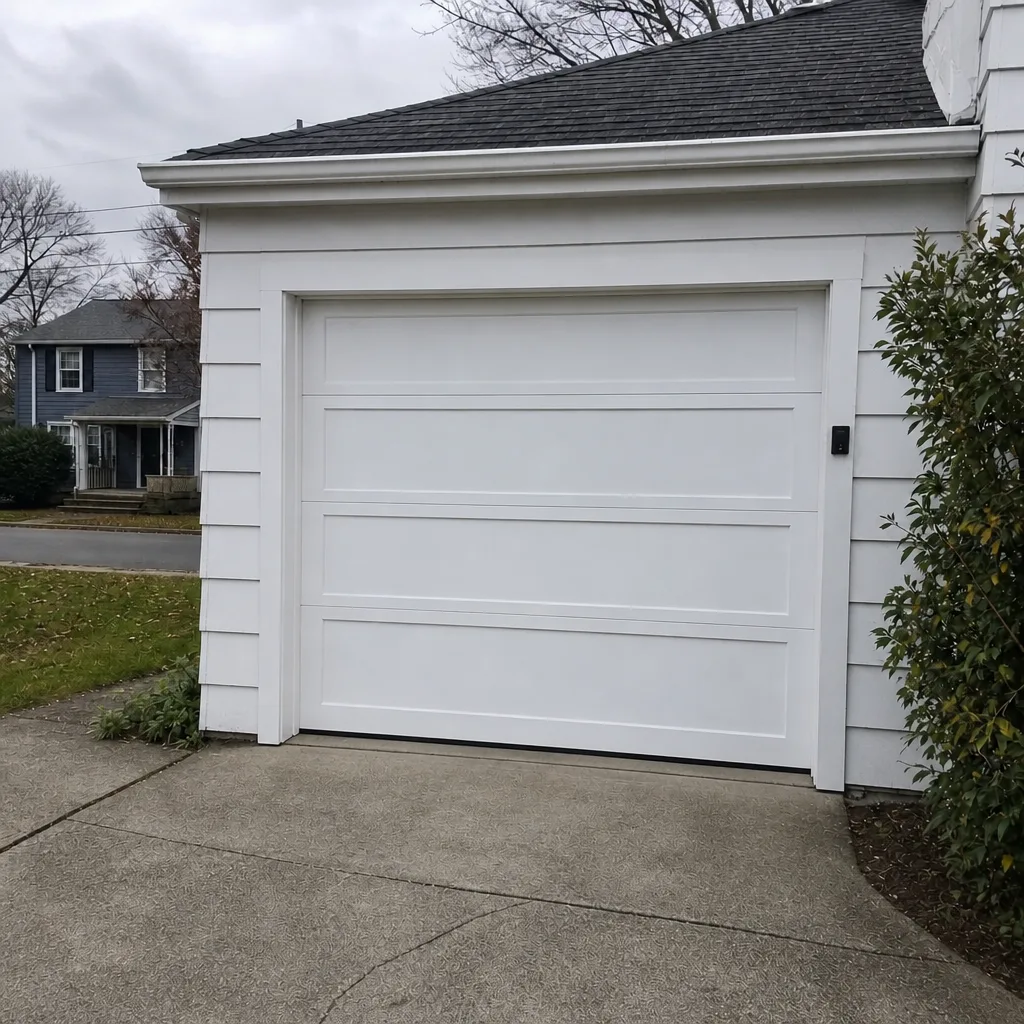
See the difference
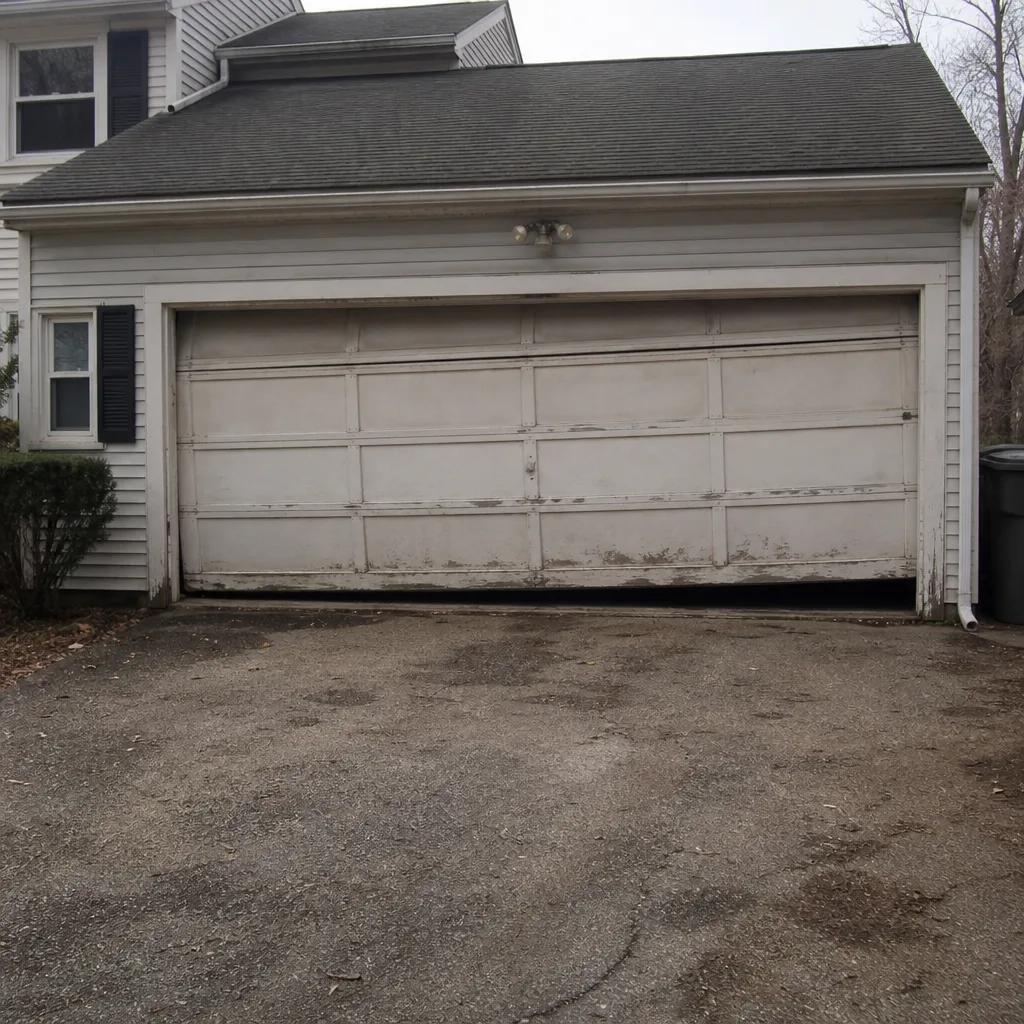 Before
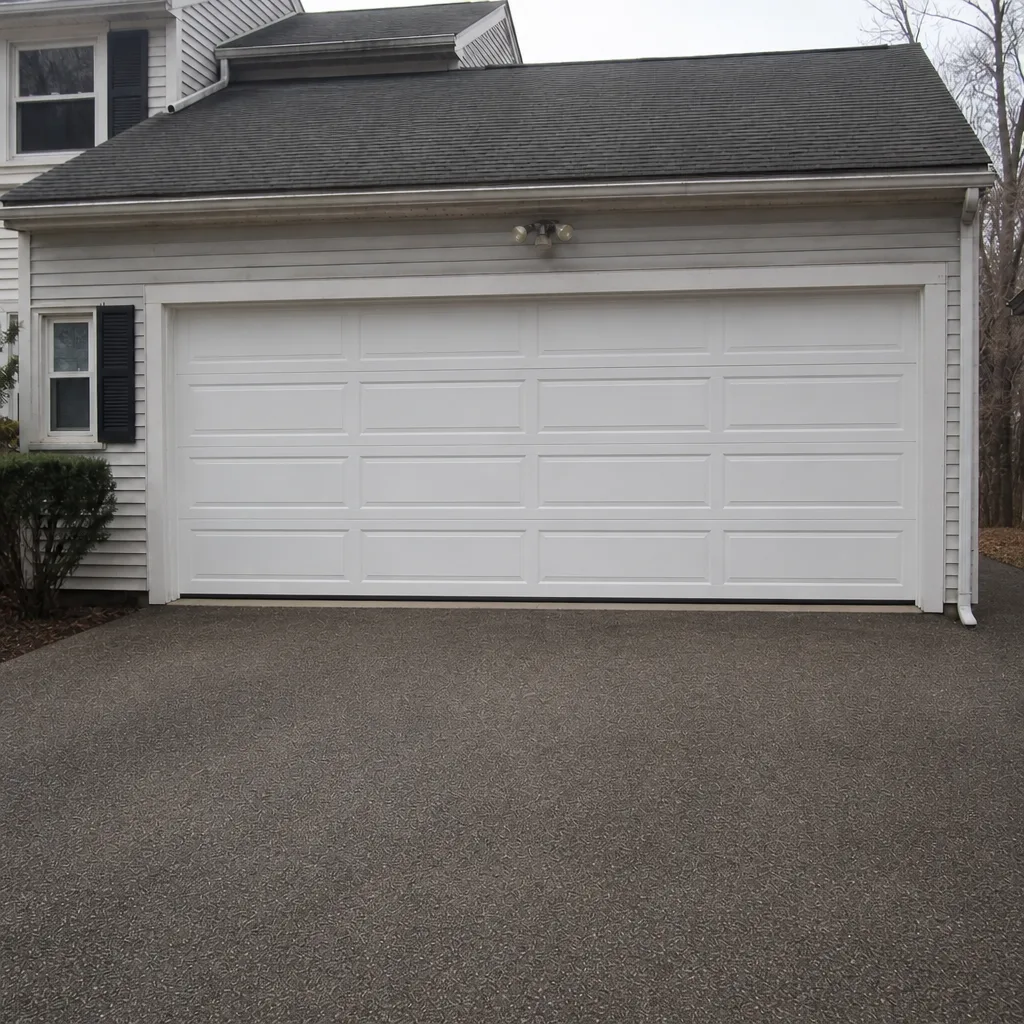 After
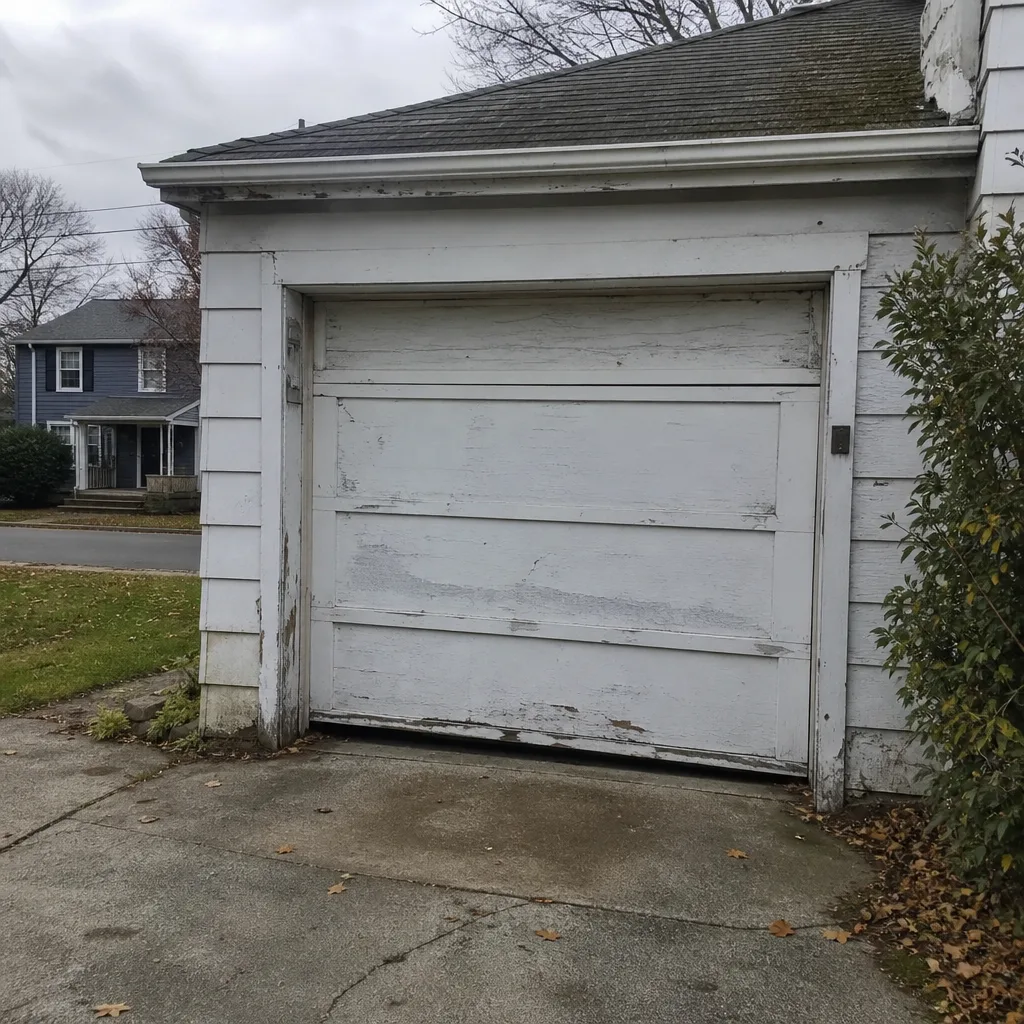 Before
 After
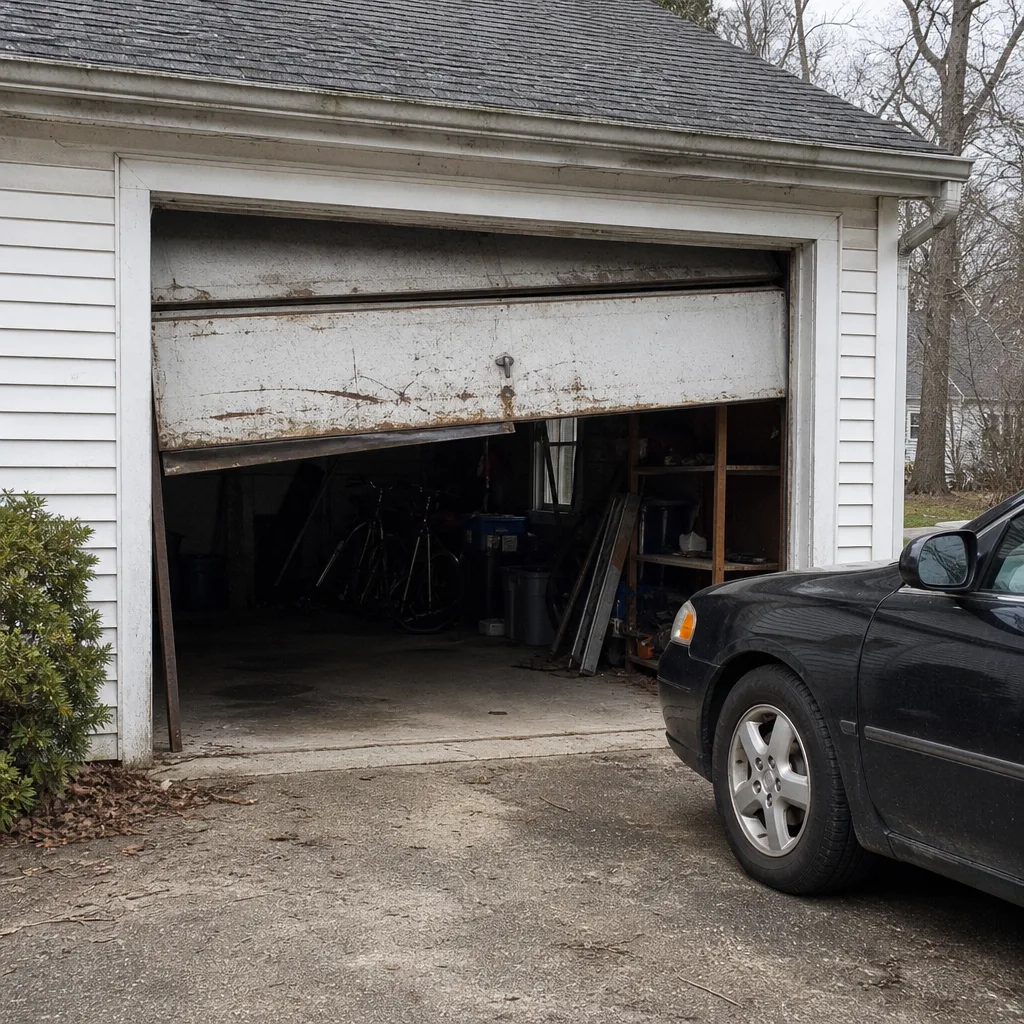 Before
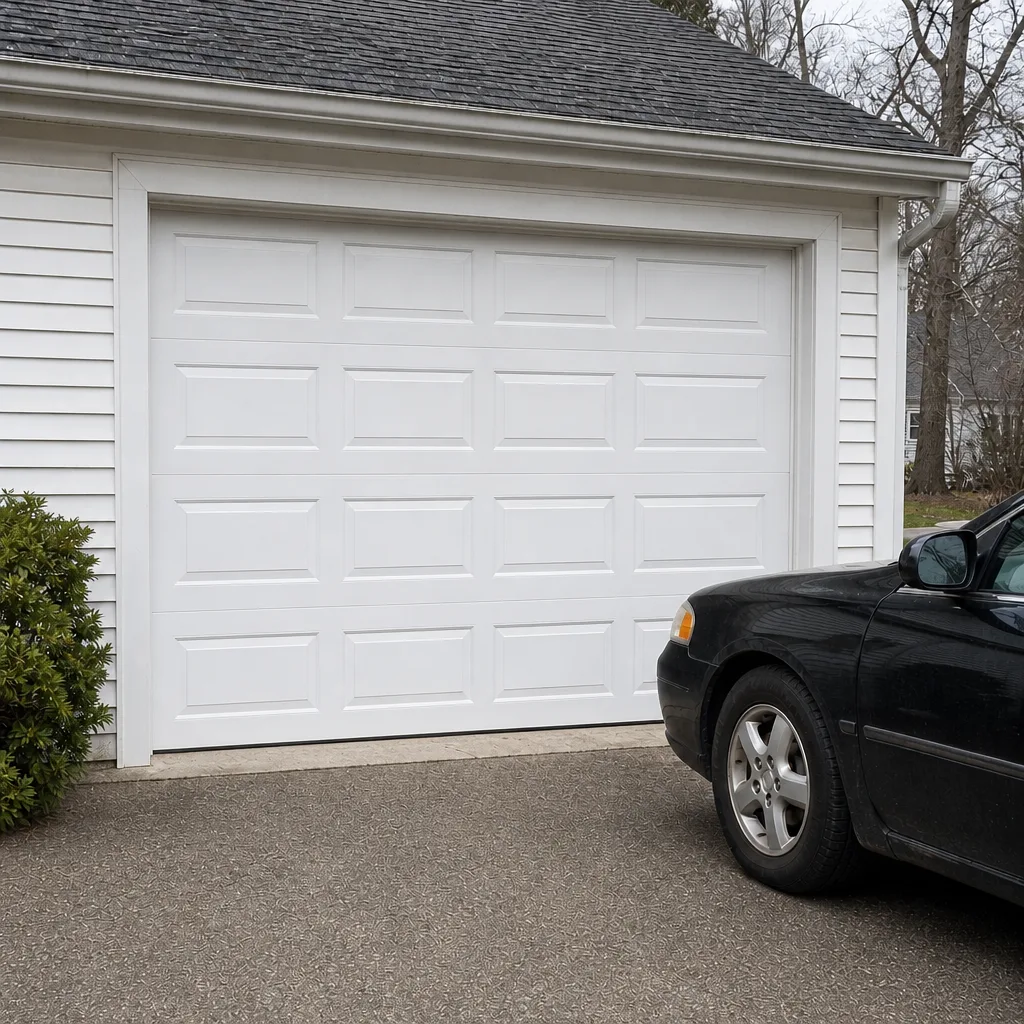 After
When to Call a Professional
Call a professional if you notice any of these: a popping or snapping sound near the springs, a door that won’t hold on the balance test, visible cable fraying or slack, a door that reverses or stops without warning, or a grinding noise that returns within days of lubrication. Call immediately if a spring breaks or a cable snaps, and stop using the door entirely. Never operate a door with a broken spring or a slack cable; it can come down hard or fall off the track. And if your door is older and you’re considering a replacement, a specialist can tell you whether repair or full door installation makes more sense for your situation. Stamford Garage Door Repair Pros offers free estimates in Stamford, call (855) 337-1686.
Frequently Asked Questions
A Stamford garage door should get a monthly walkaround, a quarterly seal and track check, and an annual spring, cable, and opener review. The monthly tasks take about ten minutes and cover lubrication, the balance test, and a visual check. The quarterly and annual checks go deeper, and autumn is the most important time of year for a garage door here because the cold sets in repairs that would otherwise wait for spring.
Homeowners can handle lubrication, visual inspection of seals and tracks, the balance test, safety reverse and sensor testing, wiping down hardware, and tightening visible bolts. Anything involving spring tension, cable tension, or opener force and limit adjustments should be left to a technician. Our technicians have up to 13 years of experience with these systems, and the difference between a safe task and a dangerous one is usually spring tension.
Salt water itself doesn’t reach most Stamford garages, but the coastal air near the shoreline carries more moisture and deposits that settle on hinges, brackets, and the bottom fixture. That speeds up corrosion on metal parts. Checking hardware for corrosion and wiping it down monthly is a smart local habit, especially for homes within a mile of the shoreline. Replacing a corroded bracket early is far cheaper than dealing with a door that’s drifted out of alignment.
Usually it’s a maintenance issue. Cold temperatures stiffen lubricants and make metal parts contract, so hinges and rollers get noisier. A proper garage-door lubricant applied to the moving parts often quiets it down. If the noise persists after lubrication, or you hear popping near the springs, have it checked. Winter noise that starts suddenly is worth a look; steady grinding is not something to ignore.
It depends on the opener and the problem. A worn gear or a failed sensor is often a repair that costs far less than a new unit. But if the opener is old, noisy, and the door is out of balance, the motor may have been strained for a long time. Diagnosing by brand helps here. Openers from LiftMaster, Chamberlain, Genie, and Craftsman each have their own failure patterns, and a technician who knows the brand can tell you whether a repair is worth it or whether a new opener makes more sense.
Check the bottom seal and the weatherstripping first. Once the temperature drops and stays down, a warped or hardened seal sets in place and won’t reshape in spring, which lets cold air in all winter. A quick check in late October or early November lets you replace it before the freeze. After the seals, run the balance test. A door that’s out of balance going into winter puts extra strain on the opener every time it runs.
Yes. Emergency garage door service is a core part of what we do, and we can respond when a failed door traps a car or leaves your home unsecured. If a spring snaps or a cable fails, stop using the door and call (855) 337-1686. We’ll get someone out to make it safe and keep your home secure.
The Bottom Line
Maintaining a garage door in Stamford isn’t complicated, but it needs a routine that fits this climate and this housing stock. Monthly lubrication, the balance test, and a visual check catch most problems before they become repairs. Quarterly seal and hardware checks matter more here than in milder climates, and the annual spring, cable, and opener review is where a trained eye earns its keep. The one rule that saves the most money: treat anything involving spring or cable tension as a technician job. If you want a professional walk it through, we offer free estimates in Stamford at (855) 337-1686.
Written by the team at Stamford Garage Door Repair Pros.